




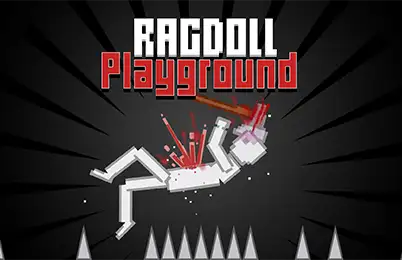









Ragdoll Playground
No Missions. No Score. Just Physics.
Ragdoll Playground is a free physics sandbox game where you spawn ragdoll figures, objects, vehicles, and weapons into an open arena and watch what happens when they interact. There are no levels to beat. No enemies attacking you. No timer counting down. The game hands you a blank space and a toolbox and lets you do whatever you want with them.
What makes it genuinely fun rather than just technically interesting is the physics engine. Setup a scene carefully, press start, and the result will be close to what you planned — but not exactly. Ragdolls tumble in ways they should not have. Explosions launch things at angles you did not expect. A chain reaction triggers that you did not set up on purpose. That gap between what you planned and what actually happened is where all the good moments come from.
No download needed. Runs in any modern browser on desktop and tablet. Android app also available.
What You Actually Do
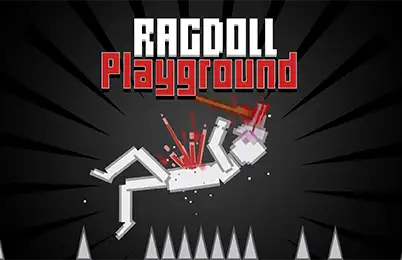
You open the game to an empty arena and a menu of things to spawn. Click something — a ragdoll, a crate, an explosive barrel, a weapon — and it appears in the scene. Drag it to where you want it. Stack things on top of each other, give a ragdoll a weapon by overlapping the item with its hand, set something on fire and see what catches. Then watch it all play out.
The physics engine runs everything: gravity, momentum, impact force, joint flex on the ragdoll bodies, bounce, and explosion radius. It is consistent enough that you can predict roughly what will happen, and unpredictable enough that something different almost always does. That combination is what keeps people coming back to build one more setup.
There is no fail state. Nothing to lose. The worst outcome is that your setup does not produce the chaos you were hoping for — which means pressing reset and trying something slightly different.
Controls
| Input | Action |
|---|---|
| Left Click | Select objects from the menu, interact with items in scene |
| Click and Drag | Move objects around the arena, position ragdolls |
| Right Click | Secondary interaction — depends on object selected |
| Scroll Wheel | Zoom in and out on the scene |
If you want to hand a ragdoll a weapon, pause the simulation first and drag the item so the handle sits on their hand. Then unpause and see what happens. That one technique opens up a completely different category of experiment.
Things Worth Trying
The sandbox gives you total freedom, which can feel overwhelming at first. Here are a few starting points that tend to produce interesting results.
Why There Are No Levels or Objectives
It sounds like a limitation. In practice it is a feature. Games with objectives push you toward their goals. Ragdoll Playground pushes you toward your own. The question is not “how do I beat this level” but “what happens if I do this instead.” That shift in framing changes the experience entirely.
Players who approach it as a toy rather than a game get the most out of it. The satisfaction is not in completing something — it is in the moment a setup produces something you did not expect and immediately want to show someone else.
New players often spawn everything at once and wonder why the scene is impossible to read. Starting with a single ragdoll and one object teaches you how the physics engine handles individual interactions. Once you understand how two things interact, adding a third becomes a genuine creative decision rather than guesswork. Build up slowly and the results are more interesting than throwing twenty things at the screen.
The Physics Engine — Why It Feels Satisfying
Ragdoll physics works by treating the body as connected joints rather than a rigid shape. When a force hits the torso, the legs swing one way, the arms another, the head follows independently. It is biologically wrong in several ways and somehow convincingly natural-looking at the same time. That combination produces the specific visual humour that makes ragdoll games compelling in the first place.
What makes Ragdoll Playground’s physics stand out slightly from similar games is the consistency. The same setup run twice should produce recognisably similar results — the ragdoll going roughly the same direction, the objects bouncing roughly the same way. The small differences between runs are where the surprises come from, but the overall behaviour is predictable enough that you can actually design for it rather than just hoping for something interesting.
A Few Honest Notes
Ragdoll Playground is a sandbox, which means it is exactly as entertaining as what you bring to it. If you sit down expecting a structured game with clear goals, you will probably get bored quickly. If you approach it as a physics toy with a genuine “what if” curiosity, you can easily spend an hour testing ideas you came up with five minutes ago.
The browser version does not save your builds when you close the tab. Every session starts fresh. Some players find that liberating — no pressure to preserve anything, just build something and watch it go. Others wish for a save feature. Either way, it is worth knowing before you spend thirty minutes arranging the perfect setup.
Mobile performance varies. Desktop browsers in Chrome, Firefox, or Edge run it well. Tablets generally work fine. Phones can be slow with complex scenes that involve many physics objects simultaneously.
Similar Games You Will Like
Frequently Asked Questions
Ragdoll Playground is one of those games that is difficult to explain why it is fun until you are twenty minutes in and realise you have been adjusting the same contraption eight times trying to get a specific chain reaction to fire correctly.