
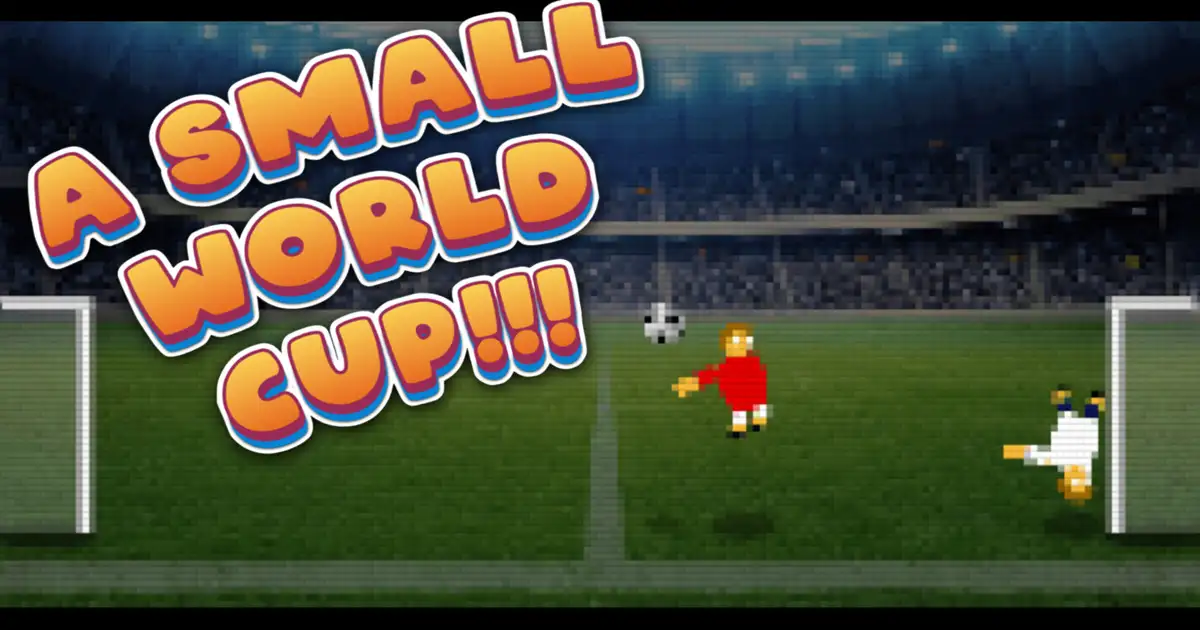
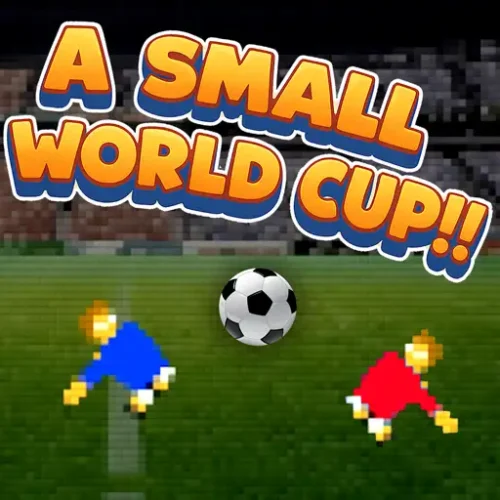





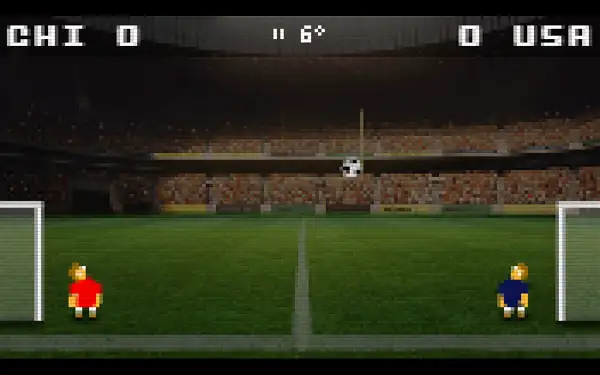
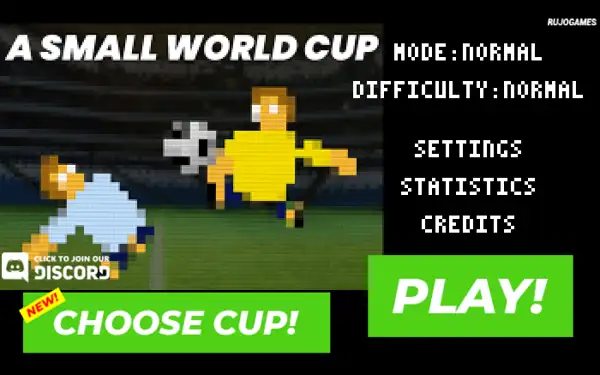
A Small World Cup is a physics-based football game where each team consists of just one floppy ragdoll player. Instead of running with arrow keys or pressing a dedicated shoot button, you drag and release your player into the ball, using momentum, body position, and unpredictable rebounds to score.
Play A Small World Cup online in Normal, Golden Goal, or Practice mode, choose from international and club competitions, and try to survive a seven-match route to the trophy. Matches are short, the controls take seconds to understand, and the ragdoll physics make even a simple clearance capable of turning into a ridiculous last-second goal.
How to Play A Small World Cup
Your job is to control one ragdoll footballer while the computer controls the player on the opposite side. Drag to launch your character around the pitch, collide with the ball, and knock it into the opponent’s goal while protecting your own net.
The footballer is built from a torso, head, two arms, and two legs connected with physics joints. You aren’t directly controlling individual limbs—the whole body reacts naturally when you launch the torso, hit the ball, collide with your opponent, or crash into the ground.
- Choose a competition and team. Each cup contains 14 selectable teams.
- Select your settings. Choose Easy, Normal, or Hard difficulty, a 45 or 90-second match duration, and your preferred control style.
- Drag to move. Click or touch and drag on the game area to build power and direction.
- Release to launch. Your ragdoll is propelled across the pitch and can strike the ball with any part of its body.
- Protect your goal. The same player has to attack, defend, and effectively act as your goalkeeper.
- Finish ahead on goals. Win the match to continue through the cup; losing ends the current tournament run.
- Reach the final. Survive all seven matches to lift the selected trophy.
A Small World Cup Controls
| Action | Desktop | Mobile / Tablet |
|---|---|---|
| Start Move | Left Click + Hold | Touch + Hold |
| Aim / Set Power | Drag Mouse | Drag Finger |
| Launch Player | Release | Release |
The tutorial gives one simple instruction: drag anywhere on the screen to move the player. The farther you drag, the more power builds up, although the game caps the maximum charge so excessively long drags won’t keep making the launch stronger.
There are also two selectable control styles: Direct and Slingshot. They reverse how the drag direction is interpreted, so try both and keep whichever feels more natural. Direct is the default setting in this build.
A Small World Cup Game Modes
The game has three distinct modes, and each changes what you’re trying to accomplish.
- Normal – The main tournament mode. Choose your team, play through the cup, record wins and losses, and try to reach the final.
- Golden Goal – The fastest and most unforgiving version of the tournament. The first goal decides the match immediately, so one mistake can end your run.
- Practice – Removes the opponent, score, and normal match clock so you can experiment freely with movement and ball control.
Practice is particularly useful when switching between Direct and Slingshot controls. A Small World Cup looks simple, but learning how much force to use and how the ragdoll rotates after a launch makes a major difference in real matches.
Competitions in A Small World Cup
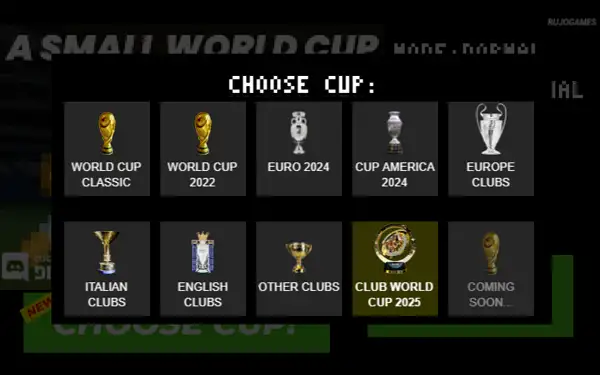
The supplied version contains nine playable competitions, ranging from international tournaments to club cups:
- World Cup Classic – A collection of famous international teams including Argentina, Brazil, England, France, Germany, Italy, Japan, Mexico, Spain, and others.
- World Cup 2022 – A tournament roster inspired by the 2022 World Cup.
- Euro 2024 – European national teams including Portugal, Italy, France, Spain, England, Germany, Netherlands, and more.
- Cup America 2024 – Teams from the Americas including Argentina, Brazil, Canada, Colombia, Uruguay, USA, Mexico, and others.
- Europe Clubs – A mixed European club competition.
- Italian Clubs – A cup centered on Italian club teams.
- English Clubs – A tournament using English club teams.
- Other Clubs – Another club selection combining teams from different countries and leagues.
- Club World Cup 2025 – A newer club competition containing teams from several regions.
Each competition contains 14 team slots with its own flags, team colors, opponent pool, and trophy graphic. The game also creates a tenth competition position marked “COMING SOON,” but that slot is disabled in this build.
How the Cup Tournament Works
A cup run isn’t just one match followed immediately by the final. Your selected team has to survive seven games:
- Match Day 1
- Match Day 2
- Match Day 3
- Round of 16
- Quarter Final
- Semi Final
- Final
Opponents are chosen from the teams you haven’t already faced, and the selection rules change as you progress. Early matches draw from one opponent pool, later rounds become less restricted, and the final stages favor the tougher pool.
The AI difficulty also naturally increases with your tournament progress. Easy reduces that underlying difficulty, Hard multiplies it, and Normal leaves it unchanged. That means the later rounds become more demanding even if you never change the difficulty option yourself.
Win match seven and your ragdoll teammates appear on the victory screen with the trophy for the competition you completed.
How Matches and Goals Work
A Small World Cup uses full physics for both the ball and the ragdoll players. Your launch applies an impulse to the player’s torso, while the head, arms, and legs follow through their joints.
Because any part of the character can hit the ball, you don’t need to line up a traditional kick. A flying head, trailing leg, rotating torso, or awkward collision can all produce a shot.
Goals trigger a dramatic slow-motion effect before play resets. The ball slows down, the screen shakes, the goal graphic appears, and the match restarts after the presentation finishes.
This is also why matches can change so quickly. A strong attacking launch can score directly, but the same uncontrolled momentum can leave your own goal completely open.
Match Time and Extra Time
You can choose between 45-second and 90-second real-time match durations.
The on-screen timer is presented like a traditional football clock rather than simply counting normal seconds. There is also a small randomized amount of added time near the end instead of every match finishing at exactly the same displayed moment.
If regulation time ends while the score is tied, the game keeps going until somebody takes the lead. The clock begins flashing while the match continues, so a draw cannot finish a normal tournament match.
Golden Goal removes the normal clock entirely because the first score already decides the result.
Difficulty Settings
A Small World Cup has three difficulty options:
- Easy – Reduces the AI’s underlying difficulty and gives you more time to learn positioning.
- Normal – Uses the standard tournament difficulty progression.
- Hard – Significantly increases the AI difficulty and makes later cup matches especially aggressive.
Difficulty affects how frequently and effectively the computer launches toward the ball. Since the tournament itself also increases the base difficulty as you advance, winning a final on Hard is substantially more difficult than winning your opening match.
The game separately tracks how many cups you’ve won on Easy, Normal, and Hard.
Why the Physics Matter
There is no conventional walking, jumping, shooting, or goalkeeping animation system here. Every important movement comes from physics.
The player consists of six main body pieces:
- Torso
- Head
- Left arm
- Right arm
- Left leg
- Right leg
These sections are connected with rotating joints, which is why the character folds, spins, tumbles, and sometimes kicks the ball in completely unexpected directions.
Longer drags generally create stronger movement up to the charge limit, while short drags give you more precise control around your own goal. Mastering the game is mostly about learning how the ragdoll’s body will rotate after you release it.
Statistics and Saved Progress
A Small World Cup keeps a persistent statistics screen for Normal-mode tournament play. Saved records include:
- Matches played
- Matches won
- Matches lost
- Goals scored
- Goals conceded
- Easy cups won
- Normal cups won
- Hard cups won
Cup progress and settings are stored locally in the browser as well. There is also an option to clear your statistics if you want to start the record over.
Tips and Tricks for A Small World Cup
- Don’t use maximum power for every touch. Huge launches are fun, but a short controlled movement is often safer when the ball is close to your own goal.
- Defend before attacking. You only have one footballer, so launching completely past the ball can leave nobody between your opponent and the net.
- Aim for where the ball is going. The ball carries a lot of momentum. Try to meet its path instead of constantly chasing its current position.
- Use your whole ragdoll. You don’t need a perfect foot-to-ball connection. Headers, body blocks, legs, and awkward spinning collisions can all create useful shots.
- Try both control modes. Direct and Slingshot interpret your drag differently. The better option is whichever makes your intended launch direction easiest to judge.
- Practice weak launches. Small movements are extremely useful for goal-line clearances and short touches where a full-power jump would overshoot the ball.
- Don’t camp inside the goal. The game includes goal-area forces designed to push players away from sitting permanently inside their own net.
- Expect later cup matches to get harder. Tournament progression itself increases the AI’s base difficulty, so save your safest defensive play for the knockout rounds.
- Be conservative in Golden Goal. There is no chance to recover from conceding—the first goal wins immediately.
- Use Practice before switching controls. With no opponent or score to worry about, it’s the fastest way to learn how far each drag sends your player.
Other Similar Games
- Super Liquid Soccer
- Basket Random
- Soccer Random
- Baseball Bros Unblocked
- A Small World Cup 2
- Soccer Bros 2
- Speed Stars
- Indoor Soccer
Frequently Asked Questions About A Small World Cup
What is A Small World Cup?
A Small World Cup is a physics-based football game by Rujo Games where one ragdoll player faces another and you launch your character into the ball to score goals.
What are the A Small World Cup controls?
Click or touch and hold, drag to choose your movement direction and power, then release to launch the ragdoll. The game supports both mouse and touchscreen input.
What is the difference between Direct and Slingshot controls?
Both use the same drag-and-release mechanic, but they interpret the drag direction oppositely. Try each setting and use whichever feels more intuitive.
What modes are in A Small World Cup?
There are three: Normal tournament play, Golden Goal where the first score wins, and Practice where you can train without an opponent or normal score.
How many competitions are in A Small World Cup?
The supplied 2025 build contains nine selectable competitions: World Cup Classic, World Cup 2022, Euro 2024, Cup America 2024, Europe Clubs, Italian Clubs, English Clubs, Other Clubs, and Club World Cup 2025.
How many teams are in each cup?
Each competition file contains 14 selectable team records. Team selections differ between international and club tournaments.
How many matches do you need to win a cup?
A full tournament run contains seven matches: three match days followed by the Round of 16, quarterfinal, semifinal, and final.
What is Golden Goal mode?
Golden Goal is a faster tournament mode where the first team to score wins the match immediately. There is no normal match clock.
Does A Small World Cup have a Practice mode?
Yes. Practice removes the AI opponent and normal score display so you can learn the physics and drag controls without tournament pressure.
Can you change the match length?
Yes. Matches can be set to either 45 or 90 seconds of real playing time.
Can you change the difficulty?
Yes. Choose Easy, Normal, or Hard. The AI also becomes more difficult as you progress deeper into a tournament.
Does A Small World Cup save statistics?
Yes. The game saves matches played, wins, losses, goals scored, goals conceded, and cup victories on each difficulty through local browser storage.
Can I play A Small World Cup on mobile?
Yes. The game supports touch controls and is designed to run in a browser on phones and tablets as well as desktop computers.
Who made A Small World Cup?
A Small World Cup was created by Rujo Games. The game credits Marco Rossi for code and graphics.
Is A Small World Cup free to play?
Yes. A Small World Cup can be played as a free browser game.
SportsUnblocked Games