







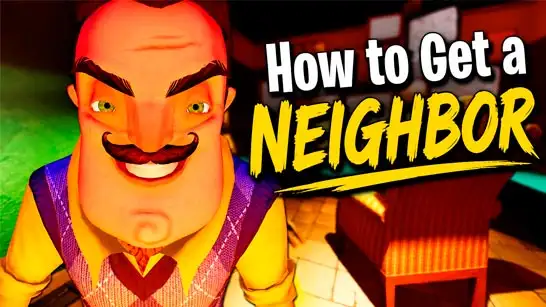
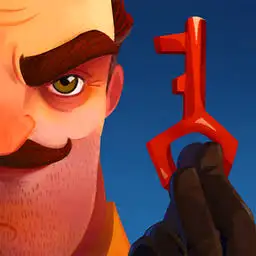







How to get a NEIGHBOR is a first-person stealth puzzle adventure where curiosity sends you across the street and into the home of a highly suspicious neighbor. What begins with finding a way into his yard soon develops into a larger investigation involving locked gates, security cameras, key cards, hidden rooms, electronic locks, traps, gadgets, a monitoring room, and a basement that clearly contains something worth protecting.
Getting inside is only part of the challenge. The neighbor can patrol, react to noise, pursue you, and catch you if you stay exposed for too long. A policeman adds another threat during parts of the adventure, while surveillance cameras make careless movement even more dangerous. Success comes from observing the environment, completing objectives in the right order, carrying useful items, and knowing when to sneak, run, distract, or temporarily disable someone blocking your route.
Who Developed How to get a NEIGHBOR?
How to get a NEIGHBOR is developed by GMD. It is a Unity-based first-person stealth and puzzle game available through browser-game platforms, with controls and interface systems designed for both computer and touch play.
Its mixture of infiltration, puzzles, movable objects, an active neighbor AI, police patrols, surveillance cameras, traps, gadgets, colored cards, keys, a shop economy, day-and-night progression, and a basement mystery gives the game significantly more depth than a simple hide-and-seek clone.
How to Play How to get a NEIGHBOR
Follow the active objective while freely exploring the neighborhood and the neighbor’s property. Early tasks teach you how to enter the yard, use movable objects, climb over obstacles, get into the house, and locate important areas.
Later objectives become more involved. You may need to reach the monitor room, locate colored access cards, find a valve, open mechanical or electronic locks, investigate the basement, and eventually find a route back out through the gates.
Search carefully rather than rushing from marker to marker. Keys, batteries, cards, weapons, traps, apples, notes, and other useful objects can be picked up and stored for later. Many obstacles only make sense after you discover the correct item somewhere else.
How to get a NEIGHBOR Controls
| Action | Desktop | Mobile / Tablet |
|---|---|---|
| Move | WASD / Arrow Keys | Virtual Joystick |
| Look Around | Mouse | Swipe / Touch |
| Jump | Space | Jump Button |
| Crouch | C | Crouch Button |
| Interact | E / Context Action | Interact Button |
| Run | Shift | Run Control |
The game also uses contextual controls for actions such as opening doors, picking up or throwing objects, firing gadgets, placing traps, checking objectives, viewing notes, and interacting with special devices. The active button changes according to what you are looking at or carrying.
Your Investigation Starts Outside the Neighbor’s House
The progression starts with practical infiltration objectives rather than immediately dropping you inside the basement. You first need to get into the neighbor’s yard. The gate is an obvious route, but it can be locked from the inside, forcing you to look for another way.
One early objective specifically teaches you to use a box to climb over the fence. From there, your tasks expand to sneaking into the house and checking where the neighbor is before moving farther inside.
This objective-driven design makes the game easier to follow than a completely open sandbox while still leaving room to explore and discover useful items away from the current marker.
Reach the Monitor Room Without Getting Caught
Surveillance plays an important role in the house. One major objective sends you into the monitor room, while three active security-camera systems watch different parts of the environment.
Cameras can change warning states when they detect a target, so crossing a monitored area without thinking can create trouble quickly. Crouching, watching camera direction, using cover, and choosing a different route are often safer than sprinting straight toward an objective.
The monitor-room objective also reinforces an important idea: before moving through a dangerous section, gather information about where the neighbor is and what is blocking your route.
The Neighbor Reacts to Noise and Can Pursue You
The neighbor has a full navigation and pursuit system rather than standing in a fixed position. His behavior includes patrolling between points, investigating noise, waiting, chasing the player, becoming dizzy or paralyzed, and navigating special links around the environment.
Your own movement and thrown objects can generate noise. That creates opportunities as well as danger. A careless crash can reveal your location, but a deliberately thrown object can also pull attention away from the path you actually want to use.
When pursuit begins, reaching safety is more important than finishing the puzzle in front of you. Learn nearby doors, fences, corners, and alternate routes before interacting with something complicated.
The Policeman Is a Second Stealth Threat
The neighbor is not the only character you may need to avoid. The active game also includes a policeman with his own patrol and pursuit logic.
One objective directly warns that the policeman should not detect you. Like the neighbor, he can pursue the player and can be affected by some of your special equipment.
Having two different hostile characters makes certain sections more about route planning than simply watching one patrol. Check who is nearby before committing to a noisy action.
Find the Blue Card, Green Card, Keys, and Valve
Access progression relies on several kinds of locks. The environment contains normal doors, bolts, gates, electronic locks, a numerical code lock, and colored access-card systems.
Important objectives include finding the Blue Card, Green Card, and a Valve. The inventory system also contains Gold and Red cards, Gate, Silver, Gold, and other keys, batteries, nippers, and additional equipment.
A dedicated keypad provides the digits 0–9 plus Enter and Clear, so at least part of the investigation requires dealing with a code rather than simply carrying a key to every locked door.
Use the Shocker on Electronic Locks
The Shocker is one of the most important gadgets because a main objective explicitly requires it to open an electronic lock.
It is not limited to doors. The game also contains combat/status systems allowing special equipment to temporarily disable characters. Objective text confirms that both the neighbor and policeman can be paralyzed under the right circumstances.
Batteries matter as well. If your equipment runs out of charge, the game can warn that there are no batteries available, so spending every charge without thinking can leave you unable to use an important gadget later.
Blasters and Traps Give You More Ways to Escape
How to get a NEIGHBOR expands beyond basic stealth with several defensive tools. The active inventory contains a Blaster, Shocker, Sound Traps, Electro Trap, and Ice Trap, while the player system supports firing, recharging equipment, and throwing objects.
The three main trap styles serve different tactical purposes. Sound-based traps can influence attention, electrical traps can disable targets, and ice-style effects are tied to freezing or slowing characters.
These tools are most useful as escape aids and puzzle tools rather than as an excuse to confront the neighbor constantly. Creating a short window to pass a guarded door is often more useful than simply fighting in an open area.
Your Inventory Is Larger Than a Simple Key Ring
The active environment contains numerous collectible objects, including:
- Apples and batteries
- Blue, Green, Gold, and Red cards
- Gate, Silver, Gold, and other keys
- Shocker and Blaster equipment
- Sound, Electro, and Ice traps
- Nippers
- A Secret Sphere
- Sticky ammunition and additional utility items
The inventory has limited space, so the game can warn when it is full. If that happens, consider whether you still need every object you are carrying before ignoring something new.
Apples Work as the Shop Currency
Apples are more than environmental collectibles. They feed into the game’s shop economy, and the interface can display messages such as “Not enough apples!” when you cannot afford an item.
A vendor named Mr. Cao appears in the game’s objective text. The shop can sell useful equipment, while apple pickups and additional reward options provide ways to build up the amount you need.
Before spending, consider the current objective. A useful gadget or trap can be more valuable than buying something simply because it is available.
Objectives Move the Game Through Different States
The whole adventure takes place in one connected main gameplay environment, but progression changes its state. The game tracks Day, Night, and House Night conditions and has dedicated chapter-change systems.
At one point, the objective tells you to return home, rest, and think about what you have seen. That shift is part of progression rather than loading a traditional “Act 2” map.
This is an important distinction for players familiar with the official Hello Neighbor games: How to get a NEIGHBOR follows its own quest and chapter structure.
There Are Extra Secrets Beyond the Main Basement Route
Not every objective belongs to the direct path toward the basement. A separate Secret Quest system is active, along with unusual interactions involving a globe and the message “Universe map discovered!”.
There are also notes, binoculars, drawers, breakable glass, movable boxes, hidden interaction points, and other optional details that reward exploring beyond the current task marker.
If you only rush from objective to objective, you can easily miss some of these smaller discoveries.
What Is the Main Goal?
The central quest chain gradually pushes you toward the mystery hidden in the neighbor’s basement. Before you can investigate it properly, you need to penetrate several layers of security, collect access items, and survive encounters with the neighbor and police.
The later objective chain also includes escaping through the gates. Reaching the basement therefore is not the end of your problems—you still need a safe way back out.
Best How to get a NEIGHBOR Tips
- Check the objective regularly. The game has a defined quest sequence, and wandering without knowing the current requirement can waste time.
- Use boxes vertically. Early progression teaches you that movable objects can become climbing tools.
- Watch the cameras. Three active security cameras can make otherwise safe routes dangerous.
- Keep spare batteries. The Shocker and other equipment are far less useful without charge.
- Throw objects intentionally. Noise can attract enemies away from the path you need.
- Do not waste traps. Save them for guarded doors, pursuits, or areas where you need several uninterrupted seconds.
- Remember locked locations. A card or key discovered later may solve a door you found much earlier.
- Spend apples on useful progression. Shop purchases are most valuable when they help with your current objective.
Other Similar Games
How to get a NEIGHBOR FAQ
Is How to get a NEIGHBOR the official Hello Neighbor game?
No. How to get a NEIGHBOR is a separate game developed by GMD. It uses a similar first-person stealth-puzzle idea, but it should not be confused with the official Hello Neighbor developed by Dynamic Pixels and published by tinyBuild.
What is the objective in How to get a NEIGHBOR?
Your investigation begins with entering the neighbor’s yard and house, then expands into objectives involving the monitor room, cards, locks, a valve, electronic security, the basement, and eventually escaping through the gates.
Can the neighbor chase you?
Yes. The neighbor can patrol, react to noise, pursue the player, navigate around the environment, and catch you if you remain within reach.
Is there a police officer?
Yes. A policeman is active in the game and has his own patrol and pursuit system. Some objectives specifically require avoiding his detection.
What does the Shocker do?
The Shocker is used during progression to open an electronic lock and can also temporarily disable supported characters. It requires available charge or batteries.
What traps are available?
The active game includes Sound Traps, Electro Traps, and Ice Traps. They can help distract, disable, or control threats while you complete objectives.
What are apples used for?
Apples act as part of the shop economy. Collect them and spend them on available items through the vendor and shop systems.
Who is Mr. Cao?
Mr. Cao is the named vendor referenced by the game’s objectives and is associated with the shop system.
Does How to get a NEIGHBOR have multiple levels?
Progress is mainly handled through objectives, chapter changes, and Day/Night/House Night states inside the main gameplay environment rather than the official Hello Neighbor-style Act structure.
What is hidden in the basement?
Discovering what is hidden in the basement is one of the game’s major objectives. Reaching it requires progressing through several earlier infiltration, card, lock, and security challenges.
Adventure