






Who Dies Last?
What Is Who Dies Last?
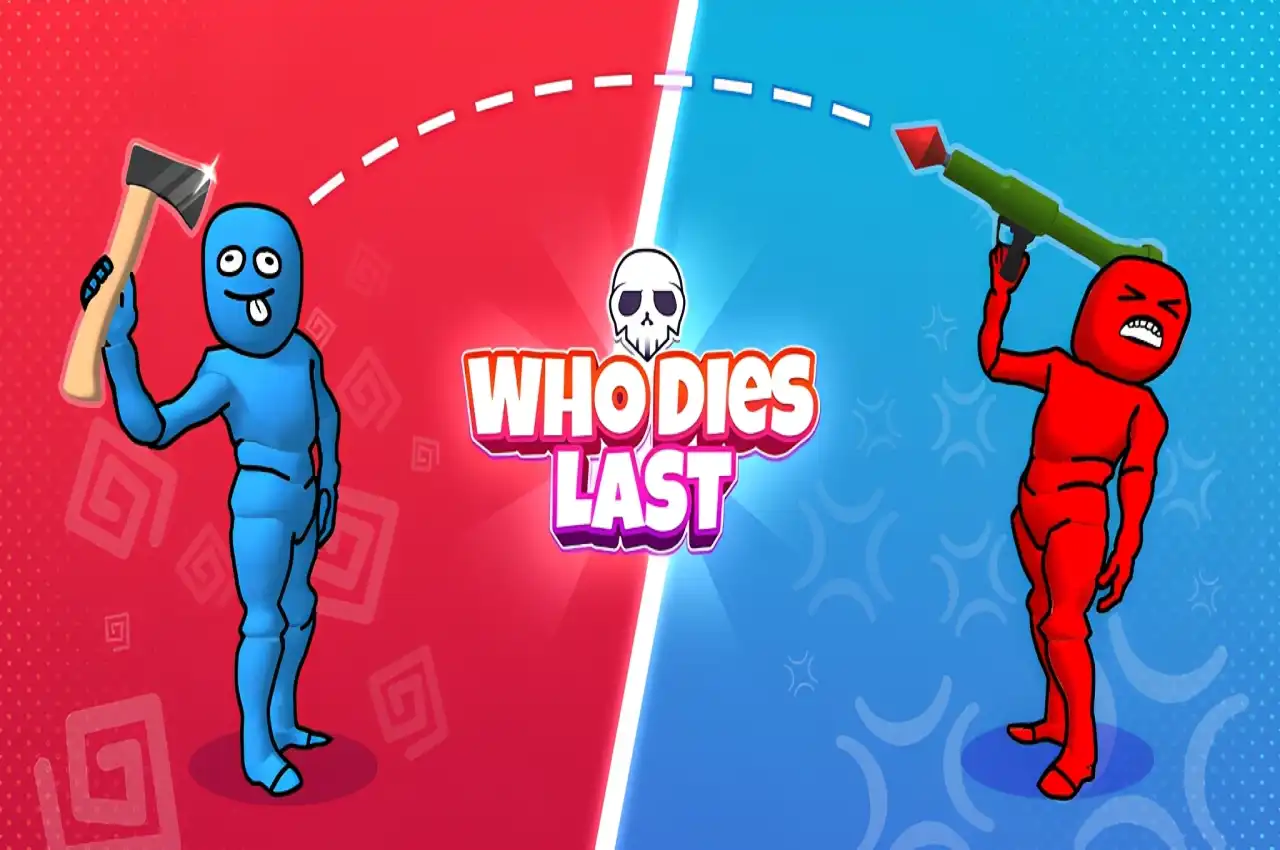
Who Dies Last? is a free ragdoll stickman fighting game rated 9.2 from over 2,000 players on 1games.io. You choose a weapon from an arsenal that runs from rifles and rocket launchers to grenades, bowling balls, and nuclear bombs, then aim and fire at your opponent. The physics engine takes over from there — ragdoll collisions, platform collapses, explosive chain reactions, and completely unpredictable results ensure that no two rounds play out the same way.
The game rewards planning but punishes overconfidence. You can set up a perfect shot that sends your opponent flying perfectly into a wall, or you can watch a rocket arc back toward you when it catches the edge of the platform. Both outcomes happen regularly. That unpredictability at a mostly skill-based game is the exact combination that makes it so replayable.
No download, no account. HTML5, plays in any browser on desktop, tablet, and mobile.
How the Aim and Fire Mechanic Works
Every attack in Who Dies Last? uses the same input system. You hold the left mouse button and drag to set your trajectory and power. The longer the drag, the more power behind the shot. The direction of the drag sets the angle. Release to fire.
It sounds simple and in the early game it is. The complexity arrives when the physics starts interacting with the environment — a rocket that travels the wrong arc can bounce off a wall, a grenade that lands in the wrong spot can trigger a chain explosion that hits you, and a bowling ball rolled at low power can stop halfway and leave you with no weapon in play. Reading the arena geometry before you fire matters as much as the aim itself.
Controls
| Input | Action |
|---|---|
| Left Click + Drag | Aim and set attack power — longer drag equals more force |
| Release | Fire the selected weapon |
| On-screen buttons | Select weapon or item before firing |
| Tap and drag (mobile) | Same as mouse — touch-based aiming and release |
The Weapons
Who Dies Last? has a wide weapon roster and each one behaves differently under the physics engine. Learning how each weapon travels and what it does on impact is what turns random shots into strategic ones.
The Arena Is a Weapon Too
The most consistent tip in Who Dies Last? from the game itself is to use stage traps rather than burning through your own ammunition. Every arena has environmental hazards — explosive barrels, collapsing platforms, narrow ledges, and moving obstacles — and pushing an opponent into any of them is more resource-efficient than trying to hit them directly with every weapon.
A grenade aimed at an explosive barrel near your opponent deals far more damage than the same grenade thrown directly at them. A hit that sends a ragdoll toward a ledge edge does more work than one that just knocks them back. Learning which environmental features exist in each arena and building attacks around triggering them separates players who burn through weapons quickly from players who conserve ammunition for rounds that genuinely need it.
Headshot damage in Who Dies Last? is meaningfully higher than body hit damage. The ragdoll physics also reacts differently to head impacts — the collision launches the body in a more dramatic and often more useful direction for arena control. Taking the extra moment to aim slightly higher on the stickman’s body rather than center mass is a consistent improvement with every weapon type.
Progression and Unlocks
Winning rounds earns rewards that unlock stronger weapons and new equipment. The unlock loop is gradual — earlier weapons remain viable for longer than you might expect, and the best strategy for building a strong collection is replaying levels you can consistently win rather than forcing progress on stages that drain your resources.
Character skins allow you to customize your stickman’s appearance before entering a match. Like most cosmetic systems in this game category, the skins affect look only and have no bearing on damage, physics reactions, or any gameplay stat.
Tips for Surviving Longer
- Predict the arc, don’t aim at where they are. Explosive and arcing weapons need to be aimed at where the opponent will be when the projectile arrives, not at their current position. A rocket aimed directly at a stickman usually lands a step behind or ahead of them.
- Never stand near your own explosive weapons. Grenades, bombs, and rockets have blast radii that hit both fighters. A grenade that detonates near you while you are still close costs you as much as it costs the opponent. After throwing an explosive, move away from the anticipated blast zone before it detonates.
- Check the arena before selecting weapons. Open arenas favor rockets. Narrow platforms favor grenades with bounce. Ledge-heavy arenas favor physical objects that roll opponents off edges. Choosing a weapon that suits the current arena before the round starts consistently outperforms using the same weapon in every situation.
- Replay easier levels to farm upgrades. The 1games.io page itself recommends this — if progress in later stages feels stuck, returning to earlier levels to accumulate rewards faster is a better use of time than grinding difficult stages with insufficient gear.
Similar Games You Will Like
Frequently Asked Questions
Who Dies Last? earns its 9.2 rating by landing exactly between “approachable” and “genuinely skillful” — a zone most physics-based fighters struggle to find. The drag-and-release aiming is easy enough that a first-time player gets results immediately, but weapon arc prediction, arena trap usage, and headshot targeting create a real and visible skill ceiling.