









Developer: Ericetto | Publisher (Mobile): Kids Games LLC | Released: 2024 | Platforms: Browser (HTML5), Android, iOS | Genre: Physics-Based Fighting
Contents
- What Is Ragdoll Hit Stickman
- Core Mechanics
- Controls
- Game Modes
- Weapons
- Coins, Skins, and Upgrades
- Arenas and Environment
- Boss Fights
- Tips and Strategies
- FAQ
What Is Ragdoll Hit Stickman
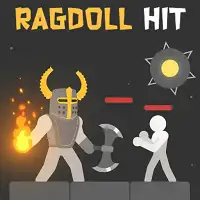
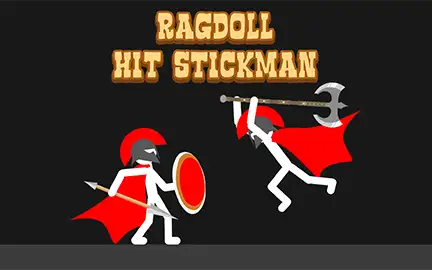
Ragdoll Hit Stickman is a physics-based fighting game developed by Ericetto, the same developer behind Ragdoll Archers. The mobile version is published under Kids Games LLC and launched on May 25, 2024. The browser version runs with HTML5 and requires no download or installation — it works directly in Chrome, Firefox, Edge, and Safari on desktop and mobile.
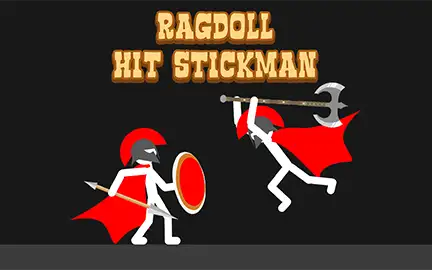
The game pits a ragdoll-style stickman warrior against a series of opponents in fast 1v1 arena battles. Every movement — punches, kicks, jumps, falls — is driven by real-time physics, meaning no two fights play out identically. Players progress through single-player levels, fight local friends in PvP, and earn coins to unlock weapons, skins, and armor upgrades.
Core Mechanics
Ragdoll Physics
Unlike traditional fighting games that use fixed animations, Ragdoll Hit Stickman calculates every limb movement through physics simulation. When the ball hits the floor, swings a weapon, or takes a hit, the stickman’s body responds dynamically to gravity, momentum, and the angle of impact. This makes every fight visually unpredictable and means that understanding momentum is more valuable than memorizing button combos.
Winning a Round
Each round is won in one of two ways: draining the opponent’s health bar to zero, or knocking them off the edge of the platform. Platform knockouts are often faster than grinding down health, which makes positioning — especially controlling the center of the arena — a key tactical consideration.
Momentum-Based Attacks
Attacks deal more damage when the stickman has built up swing momentum before connecting. Standing still and jabbing produces weak hits. Moving, spinning, or winding up before a strike — similar to the physics of a wrecking ball — significantly increases impact force. This applies to both unarmed combat and weapon swings.
Weapon Interaction
Weapons are scattered across the arena floor. Picking one up immediately changes the fighter’s reach and damage output. Weapons can also be thrown at opponents as a ranged attack. Grabbing an available weapon before your opponent does provides a significant combat advantage, particularly when the weapon offers greater reach than unarmed fists.
Environmental Hazards
Many arenas include interactive elements such as launchers, spinning gears, and ramps. These objects can be used offensively — leading an opponent into a gear or launcher deals bonus damage — or defensively by using the terrain to break an opponent’s momentum. Awareness of the arena layout is as important as raw combat skill.
Controls
| Action | Keyboard (Player 1) | Keyboard (Player 2 / PvP) |
|---|---|---|
| Move right / Attack | → or D (hold) | Varies by host |
| Move left / Turn around | ← or A | Varies by host |
| Jump | ↑ or W | Varies by host |
| Kick | ↓ or S | Varies by host |
| Grab / Throw object | Spacebar | Varies by host |
Mobile controls: On touchscreen devices, drag and swipe the stickman’s limbs to initiate attacks. Tap the screen to jump. The touch controls map directly to the same physics system as the keyboard version — there is no simplified mobile input.
The attack direction is tied to the direction key held — holding right sends the stickman swinging forward, while holding left turns and swings in the opposite direction. Combat depth comes from combining movement with timing rather than from complex button sequences.
Game Modes
Single-Player
The main campaign mode puts the player against CPU-controlled opponents across progressively harder levels. As levels advance, enemies hit harder, move faster, and use more aggressive tactics. The single-player mode is also where boss fights appear. Coins earned here are used to purchase weapons, skins, and armor before the next round. Individual levels include varied challenge types such as boxing rounds, climbing stages, and weapon-specific duels.
Two-Player PvP (Local)
Two players compete on the same device using a shared keyboard. PvP mode uses fixed arena layouts rather than the procedurally varied single-player levels. Notably, PvP is hand-to-hand only — no special weapons or upgrades carry over from the shop. The first player to win five rounds wins the match. Coins are still earned during PvP and count toward the shared progression pool.
Survival Mode
In Survival mode, the player faces continuous waves of incoming stickman enemies. There is no defined finish line — the run ends when the player’s health is exhausted. The objective is to last as long as possible and set a personal high score. This mode rewards consistent defensive play and smart weapon management over aggressive all-in tactics.
Weapons
Weapons are obtained either by picking them up mid-arena during a fight or by purchasing them from the shop between rounds. Each weapon has different reach, swing speed, and damage characteristics. The verified weapons available in the game include:
- Bat — Short reach, fast swing speed, good for beginners.
- Staff — Long reach, useful for keeping opponents at distance.
- Kanabo — Heavy club with high knockback force.
- Nunchaku — Fast, unpredictable swing arc; difficult to block.
- Butterfly Knife — Short-range, quick strikes.
- Katana — Fast, mid-range sword with good damage.
- Sword — Standard balanced weapon, reliable damage and reach.
- Holy Blade — High-tier sword with elevated damage output.
- Scythe — Wide sweep arc, effective crowd control.
- Hammer — Slow swing but very high knockback; useful for platform edges.
- Battle Axe — Heavy, high-damage weapon with downward striking arc.
- Shield — Primarily defensive; blocks incoming attacks when held.
Weapons can also be thrown at opponents by pressing Spacebar while holding one, converting any melee weapon into a ranged projectile. A well-timed throw at close range deals substantial damage and can stagger the opponent.
Coins, Skins, and Upgrades
Coins
Coins are the game’s only currency and are earned by winning battles across all modes. Boss fight victories reward significantly more coins than standard rounds. Coins are spent in the shop on weapons, character skins, and armor upgrades.
Character Skins
Skins change the visual appearance of the stickman fighter. Higher-tier skins are not purely cosmetic — they come with improved armor statistics, increasing the stickman’s durability in combat. This makes purchasing skins a meaningful gameplay decision rather than a purely aesthetic one.
Armor Upgrades
Armor directly affects how much damage the stickman can absorb before losing a round. Upgrading armor is particularly important before boss fights, where opponents deal significantly more damage than standard enemies. Running underpowered against a boss fight typically requires multiple failed attempts before progress is made, so investing coins in armor beforehand shortens the overall grind.
Weapons from the Shop
Purchased weapons are equipped before a round begins, giving the player a starting advantage over opponents who rely on picking up arena drops. Shop weapons tend to be the higher-tier options — katana, holy blade, scythe, hammer — that are not commonly found as arena pickups in early levels.
Arenas and Environment
Each level in single-player mode takes place in a distinct arena with its own layout, hazards, and interactive elements. Arenas vary in platform width, number of edges to fall off, and the density of hazard objects. Key arena elements include:
- Launchers — Spring or catapult mechanisms that send the stickman flying when triggered. Maneuvering an opponent onto a launcher while staying clear yourself deals damage and creates knockback.
- Spinning Gears — Rotating hazards on the arena floor. Contact deals continuous damage and disrupts movement. Forcing opponents into gears is a reliable damage strategy.
- Ramps and Inclines — Angled terrain that changes the effective angle of attack. Fighting uphill reduces mobility; fighting downhill creates natural momentum for strikes.
- Platform Edges — Found in most arenas. Knocking an opponent off is an instant round win regardless of their remaining health.
- Throwable Objects — Non-weapon props scattered throughout levels that can be picked up with Spacebar and hurled at opponents.
Boss Fights
Boss fights appear at intervals within the single-player campaign. Boss opponents are significantly larger or stronger than standard enemies, have unique attack patterns, and require more than simple button-mashing to defeat. Each boss has specific positional weaknesses — typically the head — and identifiable attack patterns that can be anticipated once the player has seen them once or twice.
Boss fights reward substantially more coins on completion than standard levels. If a boss feels impossible, the intended solution is usually to return to the shop and upgrade armor or equip a better weapon before re-attempting. Upgrading before a difficult boss is more time-efficient than repeated failed attempts with underpowered gear.
Tips and Strategies
Build Momentum Before Striking
Stationary attacks do noticeably less damage than momentum-backed ones. Before landing a hit, move toward the opponent or complete a short swing wind-up. The physics system rewards committed, moving attacks — standing still and jabbing is the least effective combat approach in the game.
Target the Head
The opponent’s head is the critical weak point in every fight. Attacks that land on the head deal more damage than body or limb hits. This applies to both weapon strikes and unarmed punches. Aim upward slightly when attacking to increase the chance of connecting with the head rather than the torso.
Control the Center of the Arena
Positioning near the edge of a platform is dangerous because a single knockback hit can end the round. Staying near the center gives you space to absorb knockback without falling, while an opponent pushed toward the edge is at higher risk from your next strike. In PvP, center control is especially important because neither player has weapon advantages.
Use the Environment, Not Just the Opponent
Launchers and spinning gears deal free damage if your opponent lands on them. Rather than always fighting directly, maneuver opponents toward hazards — a successful launch or gear contact removes health without any direct attack on your part. This is particularly effective in boss fights where the player is outmatched in direct combat.
Pick Up Arena Weapons Immediately
Any weapon on the arena floor that you do not pick up is available for your opponent. In the early seconds of a round, prioritize reaching the nearest weapon before the enemy does. Even a basic bat gives a reach advantage over unarmed combat that directly influences the round outcome.
For Beginners: Start with Ranged or Long-Reach Weapons
Players new to the ragdoll physics system benefit from weapons with longer reach (staff, scythe) or throwable utility because they allow damage from a safer distance while learning how the momentum system responds to different inputs. Close-quarters weapons like the nunchaku or butterfly knife require better timing and proximity comfort to use effectively.
Upgrade Before Boss Fights, Not After
If your coin balance allows, spend on armor and a high-tier weapon before entering a level that you expect to contain a boss, rather than waiting to fail and then upgrading. The extra durability from better armor often makes the difference between a two-attempt boss kill and a five-attempt one.
In PvP: Patience Beats Aggression
PvP mode removes weapons and upgrades, making both players equal. In that context, the player who reacts to opportunities rather than attacking nonstop is at an advantage — overcommitting to an attack leaves you out of position if it misses. Wait for the opponent to extend an attack, then counter while they are off-balance from the ragdoll physics.
Frequently Asked Questions
Who made Ragdoll Hit Stickman?
The game was developed by Ericetto, also the creator of Ragdoll Archers. The mobile version on Google Play is published by Kids Games LLC and launched on May 25, 2024. The browser version is available free with no download required.
What platforms is the game available on?
Ragdoll Hit Stickman runs in any modern browser (PC, tablet, mobile) via HTML5 with no installation required. It is also available on Android via Google Play and on iOS.
How does the scoring system work?
Rounds are won by depleting the opponent’s health bar or knocking them off the platform. Wins earn coins used to buy weapons, skins, and armor. Boss fight wins award more coins than standard rounds. There is no point-based leaderboard score — progression is tracked through levels completed and coins accumulated.
Can I play with a friend?
Yes. Two-player local PvP is available on the same device using a shared keyboard. The first player to win five rounds wins the match. PvP uses hand-to-hand combat only — shop weapons and armor upgrades do not apply in this mode.
How many weapons are there?
The verified weapon list includes at least 12 weapons: bat, staff, kanabo, nunchaku, butterfly knife, katana, sword, holy blade, scythe, hammer, battle axe, and shield. Weapons are obtained from arena pickups mid-fight or purchased from the shop with coins.
Do skins affect gameplay?
Yes. Higher-tier skins come with improved armor statistics, not just visual changes. Better armor increases the amount of damage the stickman can absorb per round, which meaningfully affects survivability especially in boss fights.
What is Survival mode?
Survival mode is an endless wave-based mode where the player fights incoming enemies without a defined endpoint. The run ends when the player’s health reaches zero. The objective is to last as long as possible.
2 Player GamesAction