Escape From Prison Multiplayer – Free Adventure Game
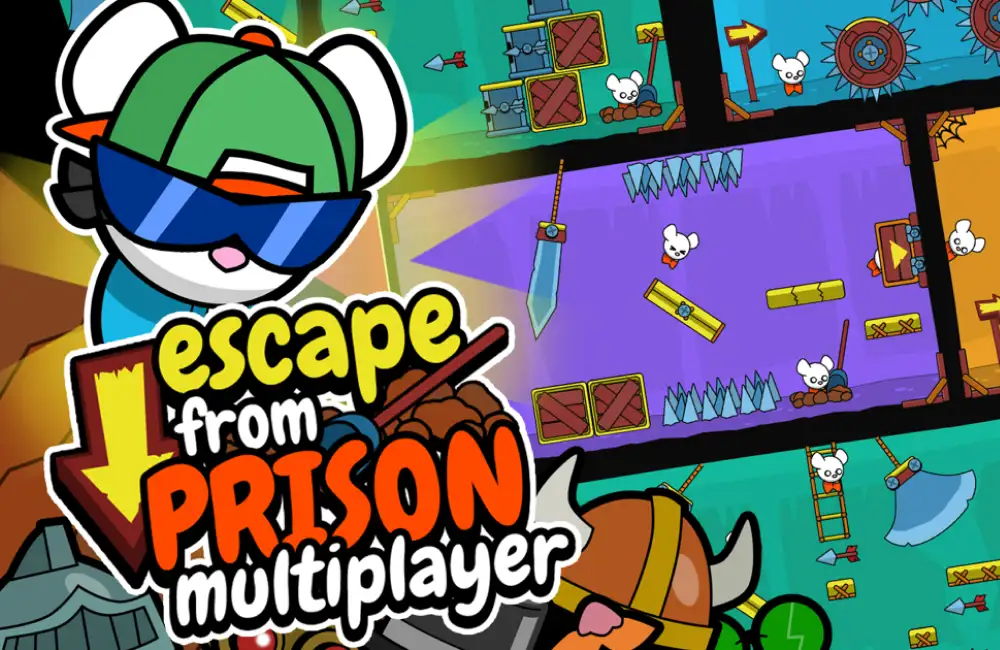
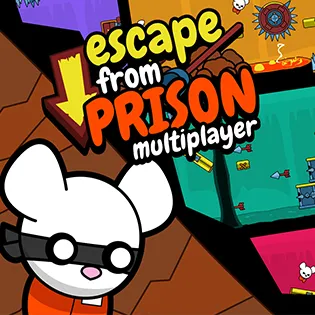
Escape From Prison Multiplayer is a free browser multiplayer platformer developed by Dinobros. You play as a small customizable mouse navigating a maximum-security prison filled with traps, moving platforms, laser grids, and blade hazards — all while a timer counts down and other players are either working with you or racing past you toward the exit.
The game works in two modes simultaneously. Sometimes you are cooperating — pressing switches together, waiting for teammates, coordinating jumps in sequence. Other times you are competing — taking faster branching paths, reaching checkpoints first, and making the occasional decision about whether to close the gate behind you once you are through. That last part is not a bug. The betrayal mechanic is intentional, and it is one of the things that makes this game more memorable than most multiplayer platformers in the browser space.
No download, no account. HTML5 browser game playable on desktop, tablet, and mobile.
DinobrosDeveloper
WASD / ArrowsControls
Co-op + CompetitivePlay Styles
FreeBrowser Play
How the Game Works
Each session drops multiple players into a series of connected prison rooms. The goal in every room is identical — reach the exit before the timer runs out or before the other players leave you behind. What changes is what is standing between you and that exit.
Rooms are procedurally arranged with branching paths, meaning each level offers multiple routes of different difficulty. A path through a cluster of blade traps might be shorter but harder to time. A longer route around the outside might be safer but eat up enough time that faster players who took the risk get there first. Reading which path suits your current situation — your position, the time remaining, where other players are — is a real and recurring decision.
The timer is not just decorative. Rooms impose a genuine deadline, and failing to clear a room before it expires sends all players back. This creates natural pressure and natural cooperation. Players who are further ahead have an incentive to wait and help; players who are behind have an incentive to push quickly and take riskier routes.
Controls
Input
Action
W / ↑ or Space
Jump
A / ← and D / →
Move left and right
S / ↓
Crouch
On mobile, on-screen directional buttons and a jump button replace keyboard input. The touch layout is clean and the game plays well on phones without a keyboard, which is part of why it runs in school and casual settings as naturally as it does on desktop.
The Traps
Every room in Escape From Prison Multiplayer is built from a set of trap types, combined and arranged differently each time. Knowing how each one works is more important than raw reaction speed.
Blade Traps
Spinning or sliding blades that move in a set pattern. The gap between cycles is predictable once you watch one full rotation — the mistake is moving on the first apparent gap rather than confirming the full pattern has completed. Most blade deaths in this game happen to players who moved a half-second early.
Laser Sensors
Horizontal or vertical laser beams that activate on crossing. Some pulse on and off; others are static with a narrow gap to duck through using the crouch input. The crouching mechanic exists specifically for laser rooms — players who do not use it will find laser sections significantly harder than they need to be.
Collapsing Platforms
Platforms that drop after being stood on for a moment. The instinct to pause and plan on a platform is exactly what collapses it. Move continuously in rooms with collapsing sections — stop on a stable surface to plan, not on a timed one.
Spiked Walls and Moving Hazards
Walls covered in spikes that need to be passed during movement windows, and hazards that track a set path through the room. Moving hazards are the most demanding trap type for timing because they require you to be in a specific position at a specific moment — not just faster than the obstacle but synchronized with it.
Gate Switches
Buttons and switches that open gates to progress. Some require multiple players to press simultaneously — genuine co-op moments. Others can be activated by one player and then, crucially, can be triggered a second time to close again. The betrayal mechanic lives here.
The Betrayal Mechanic — The Most Talked-About Feature
Certain gates in Escape From Prison Multiplayer can be opened and closed by switches. When you reach a switch and activate it to open a gate, you can choose to move through and activate it again from the other side, closing it behind you and trapping whoever had not cleared the gate yet.
This is not a glitch. It is a built-in feature the developers included intentionally. The result is that sessions with friends — or even strangers — occasionally produce exactly the kind of dramatic, panic-inducing moment that gets screenshots and clipped videos: one player laughing on one side of a sealed gate, another player being chased by a blade trap on the wrong side of it.
The social contract of gate switches
Playing this with people you know creates its own unspoken rules around when betrayal is acceptable and when it constitutes an actual social incident. Playing with strangers removes those rules entirely. If you are hosting a session with newer players, mentioning the gate mechanic before the first round sets expectations. If you choose not to mention it, the first incident will establish the tone of the session on its own.
Co-op vs Competitive — Two Valid Ways to Play
Playing cooperatively
Coordinate gate switches, wait for teammates before triggering timed sections, call out trap patterns to players behind you. Rooms with simultaneous button requirements force this anyway — learning to cooperate on the mandatory moments makes voluntary cooperation feel natural. Co-op sessions tend to reach harder rooms further into the prison.
Playing competitively
Take riskier branching paths, prioritize speed over safety, and use gate switches strategically to slow opponents. Competitive sessions are faster and more chaotic. Individual skill matters more here than in co-op because you cannot rely on teammates covering for mistakes or helping through simultaneous-button rooms.
Customization
Before and between sessions you can customize your mouse character from a full wardrobe of cosmetic options. These have no effect on gameplay — they exist entirely to make your character identifiable and personal in the chaos of a multi-player session.
Costume options include the standard striped prisoner outfit plus a range of unlockable alternatives: ninja, astronaut, shark, and more. Hats, glasses, and accessories layer on top of outfits. Advanced customization options include jump effects — altering the visual or audio feedback when your character jumps, a small touch that becomes noticeable after a few sessions.
Power-ups
Power-ups appear in certain rooms and provide temporary advantages during the run. Confirmed types include speed boosts that extend how quickly you clear a section and temporary invincibility that lets you pass through a trap cycle without penalty. Neither lasts long enough to trivialize the room they appear in, but landing one at a critical moment — a blade section you have been failing or a race to a gate switch — changes the outcome noticeably.
Tips That Actually Help
1
Watch one full trap cycle before committing
Every timed trap in the game has a pattern. Watching it complete once costs a few seconds but converts a dangerous guess into a calculated move. Players who die most frequently are those who move on the apparent first gap rather than the confirmed safe window.
2
Use branching paths as a reading tool first
When you see multiple routes, take a moment to look both ways before committing. A dangerous-looking shortcut is sometimes faster than it appears once you understand the trap pattern. A safe-looking long route sometimes has a hidden hazard mid-section that costs more time than the difficult short path.
3
Crouch through lasers rather than jumping over them
Many laser configurations sit at a height where ducking under them is the intended solution. Players who default to jumping often clip the top of a laser beam they would have cleared cleanly with a crouch. In rooms with multiple laser lines at different heights, combining crouches and jumps in sequence is the correct approach.
4
Do not stop on collapsing platforms to plan
The instinct to pause on a platform before a difficult jump causes collapse more often than the jump itself causes failure. Spot your landing target before you reach the collapsing section, then keep moving through it without stopping. Planning mid-section costs the platform.
5
Pick up power-ups mid-room, not at the cost of positioning
Power-ups are worth collecting when they sit on your natural path through a room. A power-up that requires a significant detour — especially near a moving hazard — costs more than it provides in most situations. Only break your line for a power-up when the room ahead clearly demands one.
Escape From Prison Multiplayer was developed by Dinobros.
Is the game free to play?
Yes, completely free. No download, no account, no purchases. Plays in your browser on desktop, tablet, and mobile.
What are the controls?
WASD or Arrow Keys to move. W, Up Arrow, or Spacebar to jump. S or Down Arrow to crouch. On mobile, on-screen buttons replace the keyboard.
Can you play alone or does it require other players?
The game works solo but is designed for multiplayer sessions. Single-player runs let you learn trap patterns and room layouts without pressure. Some rooms with simultaneous button requirements are designed specifically for multiple players, which makes solo runs harder in those sections.
What is the betrayal mechanic?
Certain gate switches in the game can be activated twice — once to open the gate and once to close it again. A player who has already passed through can choose to close the gate behind them, trapping whoever had not cleared it yet. This is an intentional design feature, not a glitch.
Can I play with friends in a private session?
Yes. You can set up sessions with people you know rather than matching with strangers online, making it well-suited for playing with friends or family.
What trap types appear in the game?
Confirmed trap types include blade traps, laser sensor grids, collapsing platforms, spiked walls, and moving hazards. Each follows a specific pattern or timing cycle that can be learned and used to plan movement rather than reacting on instinct.
What do power-ups do?
Power-ups provide temporary advantages during a run. Confirmed types include speed boosts and temporary invincibility. They appear in specific room locations and last long enough to affect one key section of the level rather than the full room.
Is this the same as Escaping the Prison or Prison Escape.io?
No. Escape From Prison Multiplayer by Dinobros is a cartoon mouse multiplayer platformer. Escaping the Prison (CrazyGames) is a single-player Henry Stickmin choice-based adventure with multiple endings. Prison Escape.io is a separate multiplayer game available on Steam and browser with different game modes and mechanics. All three use a prison escape theme but are entirely different games.
Can I play at school?
Yes. The game is HTML5-based with no download or installation required, which means it typically runs on school networks without issues. It is also family-friendly with cartoon visuals and no graphic content.
✦ Final Verdict
Escape From Prison Multiplayer earns its place in the multiplayer party game genre by doing something most similar games do not bother with — giving players a genuine choice about cooperation. The trap rooms are well-designed and learnable, the branching paths add real decision-making, and the betrayal mechanic creates the kind of memorable moment that makes sessions worth talking about afterward. It works just as well for five minutes with strangers as it does for an extended session with friends who have started making house rules about the gate switches.