


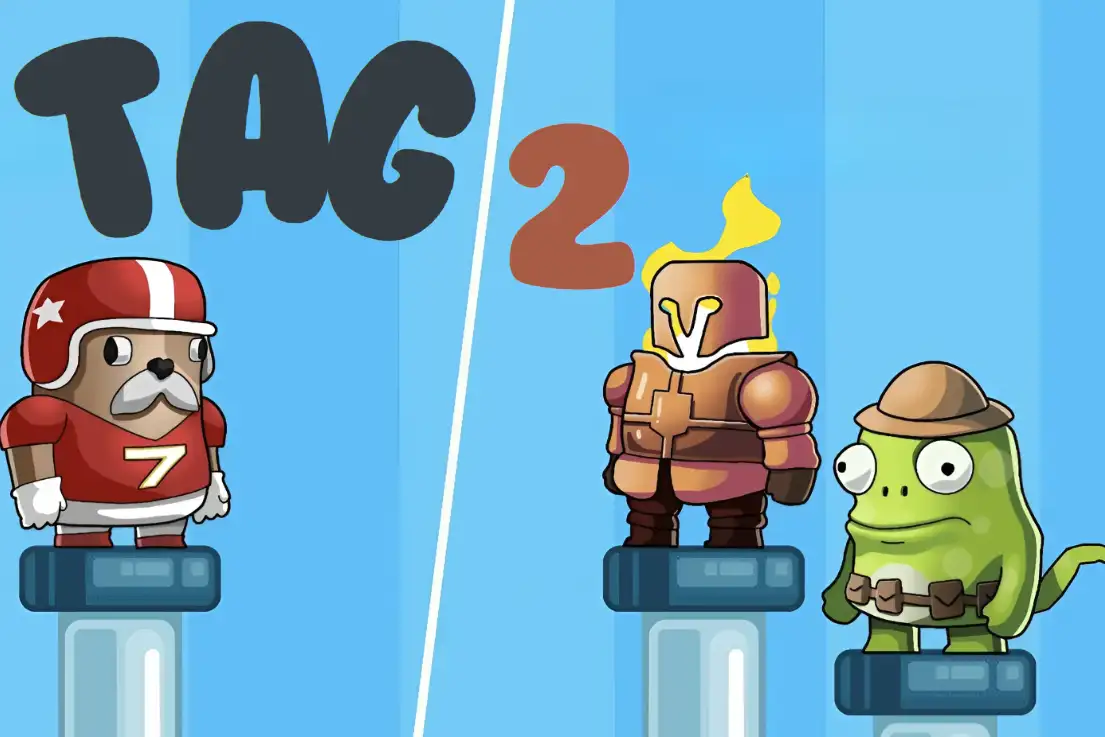





Tag 2 is a multiplayer action game developed by JetGames where players compete in fast-paced bomb-tag matches across obstacle-filled arenas. Instead of simply chasing opponents, the main objective is to avoid holding the bomb when the countdown reaches zero.
Players must use portals, bounce pads, map shortcuts, and quick movement decisions to pass the bomb to other players before time runs out. With multiple game modes, character progression, daily quests, and support for up to four players, Tag 2 turns a simple playground concept into a surprisingly strategic multiplayer experience.
What Is Tag 2?
In most Tag 2 matches, one player starts with a bomb. The objective is not simply to avoid being tagged but to avoid holding the bomb when the countdown reaches zero. Players must pass the bomb to opponents before the timer expires while simultaneously avoiding receiving it back. This creates constant movement and makes every second of a round feel dangerous.
Unlike traditional tag games where a single hunter chases everyone, Tag 2 often turns every player into both a runner and a threat at different moments.
Why Tag 2 Feels Different From Traditional Tag Games
Most tag games rely almost entirely on speed. Tag 2 introduces additional layers of strategy through movement mechanics.
Players must constantly evaluate:
- Escape routes
- Platform positioning
- Vertical movement
- Opponent locations
- Chase angles
A slower player with better positioning can often survive longer than a faster player making poor decisions.
This balance between movement and strategy creates a much deeper experience than traditional playground tag.
Core Gameplay Loop
Every round follows a simple structure:
- A player becomes the tagger.
- Runners attempt to avoid being caught.
- Tagged players join the hunters or become vulnerable depending on the game mode.
- The round continues until all runners are caught or time expires.
Because player positions constantly change, every match creates unique situations and different chase patterns.
No two rounds play exactly the same way.
The Bomb Mechanic
The bomb is the most important object in Tag 2.
When a player is carrying the bomb, a countdown begins. If the timer reaches zero while the bomb is still attached to that player, they are eliminated or lose the round depending on the game mode.
This creates a constant cycle of:
- Chasing opponents
- Escaping bomb carriers
- Predicting movement
- Passing the bomb at the right moment
Many beginners panic when the timer becomes low. Experienced players stay calm and focus on cutting off escape routes rather than blindly chasing the nearest opponent.
Winning often comes down to timing rather than speed.
Controls
PC Controls
- A / D or Left / Right Arrow Keys = Move
- W / Up Arrow = Jump
- Spacebar = Special Movement (if supported by version)
Mobile Controls
- Touch Controls
The controls are intentionally simple, allowing players to focus entirely on movement and positioning.
Characters And Progression
Tag 2 includes a character progression system that encourages long-term play.
Players can unlock new characters through gameplay, challenges, and daily objectives.
Different characters may feature variations in:
- Speed
- Agility
- Movement feel
- Visual style
Although player skill remains the most important factor, selecting a character that matches your preferred playstyle can provide a small advantage.
Daily quests also reward progression and help players unlock additional content more quickly.
The Most Important Mechanic: Movement Efficiency
Most beginners think survival depends on running as fast as possible.
Experienced players know movement efficiency matters far more.
Movement efficiency means:
- Taking shorter routes
- Avoiding unnecessary jumps
- Preserving momentum
- Using platforms intelligently
Many players lose because they constantly change direction and waste movement opportunities.
The best runners move with purpose.
Every jump should have a reason.
Every route should lead somewhere useful.
Understanding Vertical Advantage
One of the biggest mistakes new players make is staying on the ground.
Higher platforms often provide:
- Better visibility
- More escape routes
- Longer reaction windows
- Safer positioning
Taggers frequently struggle to reach players who maintain strong vertical positioning.
This is especially true on maps with multiple elevation levels.
Advanced players constantly rotate between high and low ground depending on enemy pressure.
How To Escape Chasers
Successful escapes usually follow one of three patterns.
Route Extension
The runner uses longer paths to force the tagger into inefficient movement.
Direction Reversal
The runner suddenly changes direction, causing the tagger to overshoot.
Vertical Transition
The runner moves to a different platform level, forcing the hunter to adjust their route.
Many new players rely on speed alone.
Experienced players combine all three techniques.
The Hidden Skill: Reading The Hunter
One mechanic competitors rarely discuss is hunter prediction.
Strong runners do not react to where the tagger currently is.
They react to where the tagger is going.
By reading movement patterns early, runners gain extra time to escape.
Common hunter behaviors include:
- Chasing directly
- Cutting off routes
- Guarding shortcuts
- Controlling central areas
Recognizing these behaviors dramatically improves survival time.
Things The Game Doesn’t Tell You
Corners Are Dangerous
Many players trap themselves by entering dead-end routes.
The Center Of The Map Matters
Central control often provides the greatest number of escape options.
Constant Jumping Slows You Down
Many beginners jump too often and lose movement efficiency.
Predictability Gets You Tagged
Repeating the same route eventually becomes easy to counter.
Hunters Make Mistakes Too
Many escapes happen because players remain calm while opponents panic.
Common Mistakes Beginners Make
Running Without A Plan
Random movement usually leads into traps.
Ignoring Vertical Routes
Many maps reward elevation changes.
Using The Same Escape Path Repeatedly
Good hunters learn patterns quickly.
Watching Only The Hunter
Players should also monitor potential escape routes.
Panicking Under Pressure
Poor decisions increase dramatically when players rush.
Advanced Tag 2 Tips
Use Fake Routes
Move toward one platform before quickly changing direction.
This often causes hunters to commit to the wrong path.
Control Platform Edges
Edges create opportunities for sudden reversals.
Preserve Escape Options
Always know where your next route leads.
Rotate Through Different Areas
Avoid becoming predictable.
Force Longer Chases
The longer a hunter spends chasing one player, the fewer opportunities they have to pressure others.
How To Play As The Hunter
Most guides focus entirely on runners.
Playing as the hunter requires a different mindset.
Instead of chasing directly:
- Predict movement
- Cut off routes
- Force mistakes
- Control important areas
Many skilled hunters catch players by controlling space rather than outrunning them.
The shortest route is often not the most obvious route.
Understanding Map Control
Map control becomes increasingly important as player skill rises.
Strong players learn:
- Shortcut locations
- Safe platforms
- Dangerous corners
- High-traffic routes
- Chase bottlenecks
Players who understand map design often outperform mechanically stronger opponents.
Knowledge creates advantages before the chase even begins.
Portals And Bounce Pads
Many maps contain special movement tools that dramatically change how rounds play out.
Portals
Portals instantly teleport players between different sections of the map. Skilled players use portals to escape dangerous situations, create surprise attacks, or quickly reposition when carrying the bomb.
Bounce Pads
Bounce pads launch players high into the air and provide access to otherwise unreachable areas.
Advanced players often combine bounce pads with portals to create escape routes that are difficult for opponents to predict.
Learning portal locations and bounce-pad timing is one of the fastest ways to improve survival rates.
Why Tag 2 Is So Addictive
Several systems combine to create excellent replayability:
- Short matches
- Constant movement
- Competitive multiplayer
- Skill progression
- Unique chases
- Dynamic player behavior
Because opponents constantly make different decisions, every match feels fresh.
The game rewards practice without becoming overly complicated.
Zombie Mode
One of the most popular alternative modes in Tag 2 is Zombie Mode.
Instead of passing a bomb, infected players attempt to turn survivors into zombies.
Every successful infection increases the zombie team, making survival progressively harder for the remaining players.
Unlike Bomb Mode, where danger constantly changes hands, Zombie Mode creates increasing pressure as the match progresses.
Players who survive longest often rely on map knowledge, portal usage, and movement efficiency rather than speed alone.
Similar Games You Might Enjoy
Frequently Asked Questions
What is Tag 2?
Tag 2 is a multiplayer platforming game where players either avoid being tagged or attempt to tag other players.
Is Tag 2 multiplayer?
Yes. The game is primarily designed around multiplayer chase gameplay.
What is the best strategy for beginners?
Focus on movement efficiency, learn the map layout, and avoid repeating the same escape routes.
Is speed the most important skill?
No. Positioning, route planning, and prediction often matter more than pure speed.
How do hunters catch experienced players?
The best hunters cut off escape routes rather than chasing directly.
Does map knowledge matter?
Absolutely. Understanding shortcuts, platform layouts, and safe routes provides a major advantage.
Final Thoughts
Tag 2 successfully turns a simple childhood game into a competitive platforming experience built around movement, prediction, and map knowledge. While beginners may rely entirely on running, experienced players discover a deeper game involving route planning, hunter psychology, vertical positioning, and escape management.
ActionCasualPlatformUnblocked Games