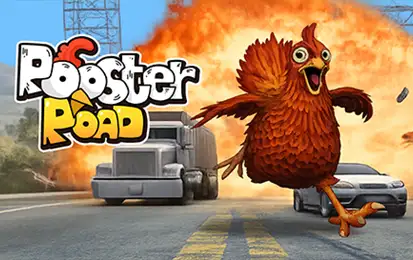
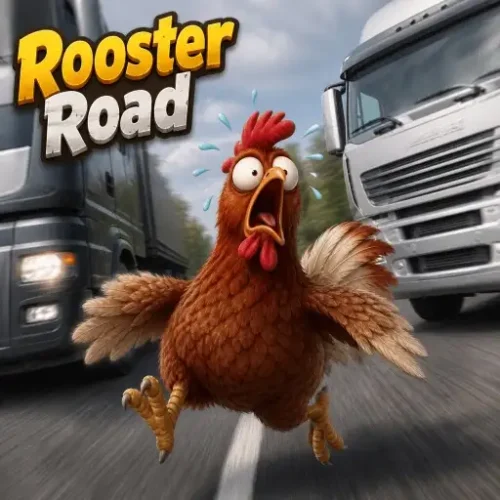
Rooster Road is a free one-button multiplayer battle royale game developed by AZGames and released on 6 May 2026. You play as a chicken trying to cross a chaotic multi-lane highway packed with cars, trucks, and buses — while dozens of other players are doing exactly the same thing at the same time, all trying to survive longer than everyone else.
The control scheme is as minimal as it gets: hold to move your animal forward, release to stop or pull back. One button. But what fills that button with difficulty is the volume and variety of traffic, the unpredictability of dozens of other players making decisions around you, and the way the road gets faster and busier the longer anyone survives.
No download, no account. HTML5 browser game on desktop, tablet, and mobile.
AZGamesDeveloper
6 May 2026Released
Hold / ReleaseOne Button
FreeBrowser Play
How It Works
Every match starts with a large group of animal characters lined up at the edge of a busy multi-lane highway. The traffic is already moving. Your job is to cross as many lanes as possible without getting hit — and to outlast every other player doing the same thing.
Holding the button pushes your animal forward into traffic. Releasing stops movement or pulls the animal slightly backward, away from danger. The entire game exists in the decision of when to hold and when to release — when a gap between vehicles is wide enough to commit to, and when to pull back and wait for the next one.
One hit from any vehicle ends your run instantly. There is no health bar and no near-miss forgiveness. The traffic speed increases the longer a match runs, and the road sections become busier and less predictable. The last animal still alive — or the first to reach the finish line — wins the round.
The battle royale element changes how traffic feels
In a single-player road crossing game, you only have to read the traffic. In Rooster Road, you also have to read what dozens of other players are doing — and their decisions affect yours. A cluster of players rushing a gap together can cause chain eliminations. A player moving through a section ahead of you has already tested whether it was clear. The crowd is both a threat and a source of information if you know how to use it.
Controls
Input
Action
Hold Left Click / Spacebar
Move your animal forward into traffic
Release
Stop movement or pull the animal slightly backward
Hold tap (mobile)
Move forward — same mechanic on touchscreen
Release tap (mobile)
Stop and retreat slightly
The backward movement option is underused by almost every new player. Most people treat release as “stop” and hold as “go.” The slight backward pull on release is a genuine survival tool — it creates separation between your animal and approaching traffic when you have misjudged a gap and need a half-step of recovery space.
The Vehicles — Each One Requires Different Timing
Not every vehicle on the road works the same way. Understanding how each type moves is what separates players who survive on luck from players who survive consistently.
🚗
Cars
Fast and narrow. Cars move quickly across lanes, which means gaps between them close fast — but their small width also means a gap between two cars is achievable with a short, confident forward push. The danger is misjudging how quickly a car at the edge of your field of view is closing. Cars are the most common source of confident-but-wrong crossings.
🚌
Buses
Slower than cars but significantly wider. A bus takes longer to pass than a car moving at the same relative speed, which creates longer mandatory waits before crossing. Players who time their crosses off car gaps frequently get caught by a bus in the adjacent lane that they did not fully account for. Always check the lane beside the one you are crossing — bus width often extends the hazard zone.
🚛
Trucks
The heaviest and widest vehicles. Trucks occupy the most road space and create the longest clear period after passing — but also the longest wait before it is safe to start moving. A truck clearing a lane creates a reliable window, but that window ends the moment the next vehicle arrives. Trucks that travel in convoy sequences leave almost no safe gap between them at higher traffic speeds.
⚡
Speed Boost Vehicles
Certain vehicles move at irregular high speeds that break the traffic rhythm you have been reading. These are the source of eliminations that feel unfair — vehicles that arrive faster than the established pattern suggested they would. Whenever traffic has been moving at a consistent pace for several seconds, treat the next vehicle with extra caution rather than assuming the same timing still applies.
The Crash Multiplier — Higher Risk, Higher Score
Rooster Road includes a crash-multiplier mechanic that rewards advancement through riskier gaps. Successfully crossing a lane where traffic was moving fast or where the gap was narrow earns a higher score multiplier than crossing a clearly empty lane. The multiplier compounds with consecutive risky crossings.
This creates a genuine strategic choice that most players ignore: playing conservatively extends your survival time but caps your score. Playing aggressively through tighter gaps scores more per crossing but increases elimination risk significantly. The players at the top of any leaderboard are almost always making riskier gaps work — not simply surviving longer than everyone else by waiting.
Power-ups on the Road
Speed boosts and other power-ups appear on the road surface during matches. Collecting them provides temporary advantages — faster forward movement, brief protection, or score multipliers. The complication is that collecting them requires moving through traffic to reach them, which creates a deliberate risk-reward decision mid-crossing.
The general rule: power-ups that sit in a lane gap you were going to cross anyway are worth collecting. Power-ups that require an additional forward push through a partially clear lane are usually not worth the extra exposure, especially in the later stages of a match when traffic is moving faster.
How to Survive Longer Than Everyone Else
1
Watch one full traffic cycle before moving
At the start of each lane section, observe the traffic for one complete cycle before committing to a forward push. The rhythm of vehicles in a lane is consistent for a period before the game disrupts it. Reading that rhythm first converts guesswork into a calculated move.
2
Stay centered across the width of the road
Being in the center of the road between two lanes means you can release and pull back from either direction. A player who has drifted to the edge of a lane loses that option. When a crossing goes slightly wrong, the center position is almost always recoverable. Edge positions are not.
3
Do not follow large groups through gaps
When a crowd of players rushes a gap together, the gap closes faster than any individual player’s timing accounted for. The player at the front of the group may make it. The player at the back usually does not. Following a crowd is how confident-looking moves end in simultaneous eliminations. Let the crowd go first and assess from behind.
4
Use other players as live traffic scouts
A player moving through a lane section one second ahead of you has just demonstrated that it was clear at that moment. Their movement is useful information — not as a guarantee that it is still clear, but as a signal about which lanes were safe and where traffic patterns were in their cycle. Watching what happens to leading players costs you nothing and tells you more than waiting in place.
5
Treat the backward pull as an active tool, not a last resort
Most players only use the release-to-retreat mechanic when they have already made a mistake. Using it proactively — pulling back from a lane before a vehicle arrives rather than after it is already close — keeps your positioning clean and your timing unhurried. A deliberate small retreat is almost always preferable to a panic retreat from an already dangerous position.
Common Reasons Runs End Early
Rushing a gap that was actually a convoy
A clear-looking gap between vehicles is sometimes the front of a vehicle group traveling closely together. The first gap clears and the forward push goes in — then a second vehicle arrives immediately. Traffic convoy sequences are the most common source of shocking eliminations that feel unfair but were actually readable with one more second of observation.
Holding through a lane change at high speed
Late in a match when traffic is fast, holding the button through the crossing of one lane into the start of the next costs very little time but doubles the exposure zone. The habit of releasing to the safe sidewalk between lanes rather than holding through it continuously keeps each lane crossing isolated and independent.
Rooster Road was developed by AZGames and released on 6 May 2026.
Is Rooster Road free?
Yes, completely free. No download, no account, no purchases. Plays in any browser on desktop, tablet, and mobile.
What are the controls?
Hold left click or spacebar to move your animal forward into traffic. Release to stop or pull slightly backward. On mobile, hold and release a screen tap. That is the entire control scheme.
How do you win in Rooster Road?
Either be the last animal still alive after all other players have been eliminated, or reach the finish line first. Both approaches — conservative survival and aggressive fast crossing — are viable depending on the match and traffic pattern.
What is the crash multiplier?
Successfully crossing lanes where traffic was dense or moving fast earns a score multiplier that compounds across consecutive risky crossings. It rewards bold play with higher scores, creating a deliberate trade-off between survival time and points per crossing.
Is it better to follow other players or move independently?
Move independently. Following a crowd through a gap means entering it after the front players have already started closing it. The player at the back of a group rush is almost always eliminated. Let others test gaps first and cross after confirming they cleared successfully.
What is the difference between cars, buses, and trucks?
Cars are fast and narrow — quick gaps but fast-closing. Buses are slower but wide — require longer waits but clear a full lane once past. Trucks are the widest and heaviest — longest mandatory wait time but most reliable clear window once they fully pass. Each vehicle type needs a different timing approach for a safe crossing.
What do power-ups do in Rooster Road?
Power-ups appear on the road surface and provide temporary advantages like speed boosts, brief protection, or score multipliers. They are only worth collecting when they sit on a path you were already planning to take — reaching for a power-up through an extra risky lane push is usually not worth the additional exposure.
Is Rooster Road the same as Crossy Road?
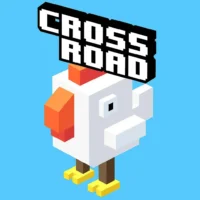
No. Both involve crossing roads with animal characters but they are different games. Crossy Road is a single-player hop-based endless game by Hipster Whale. Rooster Road is a hold-and-release one-button multiplayer battle royale by AZGames where dozens of players compete simultaneously on the same highway. The road-crossing theme is shared; everything else is different.
Can I play Rooster Road on my phone?
Yes. The game runs on mobile browsers with tap-and-hold controls. No app download is needed.
✦ Final Verdict
Rooster Road takes the simplest possible concept — help the chicken cross the road — and makes it genuinely tense by adding dozens of competing players, a crash-multiplier system, and traffic that never stabilizes. The one-button hold-and-release mechanic has more depth than it looks on the surface, and the battle royale format means no two matches play out the same way. It is fast to start, immediately competitive, and one of those games where understanding what everyone else is doing matters as much as reading the traffic itself.