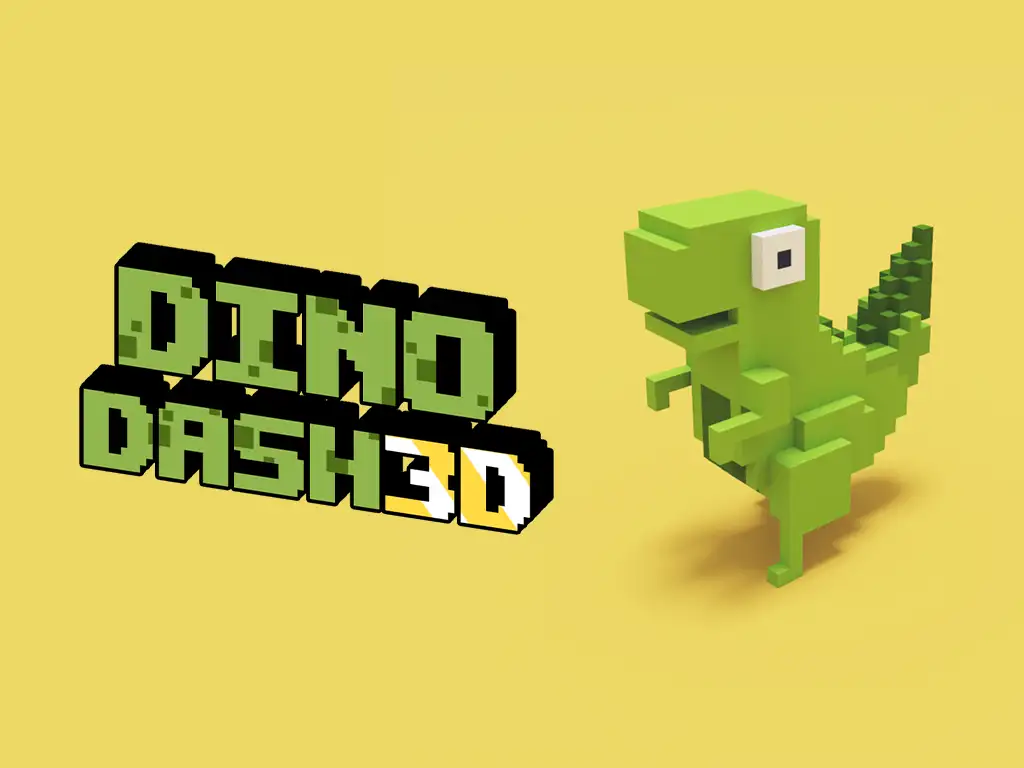
Dino Dash 3D is a free 3D endless runner inspired by the classic Chrome offline dinosaur game. You control a T-Rex sprinting through a desert, jumping over cacti, ducking under pterodactyls, leaping across chasms, and dodging scorpions — all while the game quietly speeds up and the sky moves from bright daylight through a blazing sunset into a dark night where everything becomes harder to read.
If you have ever played the Google Chrome dinosaur game when your internet went out, you already understand the core loop. Dino Dash 3D keeps everything that made it addictive and adds full 3D visuals, a richer obstacle set, a day-to-night progression, and a global leaderboard to compete on.
No download, no account. Plays in any browser on desktop, tablet, and mobile.
Jump + DuckTwo Moves
Day → Sunset → NightScene Progression
Global LeaderboardScore Ranking
FreeBrowser Play
Dino Dash 3D – Fun Endless Runner Game Online
Controls
Input
Action
Space or ↑ or Left Click
Jump over ground obstacles and chasms
↓ Down Arrow
Duck under low-flying pterodactyls
Tap (mobile)
Jump — tap screen to leap over obstacles
Two moves. That is the whole control scheme. The game is entirely about when you use them, not how many inputs you manage.
The Obstacles — More Than Just Cacti
The original Chrome dino game has two obstacle types: cacti and pterodactyls. Dino Dash 3D adds two more that change how you think about each run.
🌵
Cacti
The baseline obstacle. Cacti appear in single plants and clusters. A single cactus is an easy jump. A dense cluster requires a longer hold on the jump input to clear the full width. At higher speeds, clusters that were comfortable to clear start arriving faster than they look — the instinct to jump earlier than usual is usually correct once the speed increases.
🦕
Pterodactyls
Flying dinosaurs that pass at different heights. Low-flying pterodactyls require a duck. High-flying ones can be run under without input. The height of each pterodactyl is visible a moment before it arrives — developing the habit of reading height rather than defaulting to duck-every-time prevents the mistimed duck that sends the T-Rex into a cactus right after.
🕳️
Chasms
Gaps in the desert floor that require a timed jump to cross. Unlike cacti which have a clear visual size to judge, chasms vary in width and can appear right after a cactus — requiring an immediate second jump with almost no preparation time. The chasm-after-cactus sequence is one of the most common causes of late-game run endings. Spotting the gap before the cactus clears is the skill it develops.
🦂
Scorpions
Ground-level enemies that crawl along the road toward the T-Rex. Scorpions are lower-profile than cacti, which makes them harder to spot at high speed — they blend into the desert floor more than a tall cactus cluster does. A standard jump clears them, but the visual read needs to happen earlier than for cacti because the height difference is smaller and less obvious in peripheral vision.
The Day-to-Night Progression
Dino Dash 3D does not stay in a single visual environment. The desert shifts through three phases as your run extends, and each one changes how visible the obstacles are.
1
Daytime — bright and clear
The opening phase. Full sunlight, sharp contrast between obstacles and background. The easiest visual conditions of the run. Speed is still manageable. This is where you build your rhythm and learn the obstacle timing before the conditions start working against you.
2
Sunset — beautiful and slightly deceptive
The sky turns orange and red. The contrast between silhouetted obstacles and the warm background reduces slightly. Speed has increased since the run started. Most players do not consciously register the visual shift as a difficulty change — but reaction times that worked in daytime start catching the edges of obstacles in sunset conditions.
3
Night — dark and demanding
The hardest phase. Dark sky, reduced obstacle visibility, and the game running at its highest speed so far. Scorpions especially become harder to spot against the dark desert floor. Players who have been reacting to what they see often get caught in night mode because the visual cue arrives later. Players who have memorized obstacle patterns and start reacting to shape rather than full visibility tend to survive longer through this phase.
Tips for a Higher Score
⏰Jump earlier than feels right as speed increases. The T-Rex’s jump arc does not change when the game speeds up — only how fast obstacles arrive does. A timing that felt comfortable at 300 points will feel slightly late at 600. Shifting your jump point earlier by a fraction of a second before you feel rushed, rather than after, prevents the catching-up reaction that ends most high runs.
👁️Read pterodactyl height before committing to a duck. Not every pterodactyl requires ducking. High ones pass safely overhead. Automatically ducking for every flying dinosaur is a habit that creates unnecessary disruptions to your running posture, sometimes right before a ground obstacle that needed a jump instead.
🕳️Watch for chasms behind cacti. The chasm-after-cactus combination is deliberate level design. After clearing a cactus, resist the instinct to relax and look ahead immediately for the follow-up gap. Double-obstacle sequences are where most confident mid-game runs end.
🌙Switch to shape recognition before night mode arrives. In the late sunset phase, start training yourself to react to the silhouette and position of obstacles rather than their full visual detail. When night hits, players already using shape recognition keep their timing. Players who relied on color contrast suddenly find their reaction window has compressed.
🏆Check the leaderboard before your first run. Knowing what score range you are aiming for gives individual runs a target beyond personal best. It also shows you how achievable top-tier scores are with consistent play — which is more motivating than chasing an abstract high score number.
How Dino Dash 3D Differs From the Chrome Dino Game
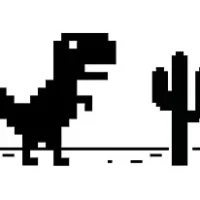
The Chrome offline dinosaur game is built into Google Chrome and appears when there is no internet connection. It was created by Google engineers in 2014. Dino Dash 3D is a separate fan-made game inspired by it — not affiliated with Google or Chrome in any way.
The core mechanic is the same: T-Rex, endless desert, jump and duck. The differences are the 3D visual treatment, the two added obstacle types (chasms and scorpions), the three-phase day-to-night progression, and the global leaderboard. The Chrome game is a two-input pixel experience. Dino Dash 3D is a fuller version of the same idea with more visual depth and more obstacle variety.
Is Dino Dash 3D the same as the Google Chrome dinosaur game?
No. The Chrome dinosaur game is built into Google Chrome and appears when you have no internet connection. It was made by Google engineers in 2014. Dino Dash 3D is a separate fan-made browser game inspired by it — not affiliated with Google. It adds 3D graphics, a day-to-night cycle, chasms, and scorpions that the original Chrome game does not have.
What are the controls?
Spacebar, Up Arrow, or left click to jump. Down Arrow to duck. On mobile, tap the screen to jump. That is the complete control scheme.
What obstacles are in Dino Dash 3D?
Four obstacle types: cacti (ground obstacles to jump), pterodactyls (flying enemies to duck under or run beneath depending on height), chasms (gaps in the floor to jump across), and scorpions (low ground enemies that require a jump). The chasm-after-cactus combination is the trickiest sequence in the game.
What is the night mode and when does it appear?
The game progresses through three visual phases as your run extends: daytime (bright, full visibility), sunset (warm orange sky, slightly reduced contrast), and night (dark sky, reduced obstacle visibility, highest run speed). Night mode is the hardest phase because obstacles are harder to see and speed is at its peak. It does not reset — once the sky turns dark it stays dark.
Does Dino Dash 3D have a leaderboard?
Yes. A global leaderboard tracks the highest scores across all players. Your score is based on how far the T-Rex runs before hitting an obstacle.
Why do my runs keep ending right after a cactus?
Very likely a chasm immediately following the cactus. Dino Dash 3D places chasms directly after cacti as a deliberate challenge — you jump the cactus, land, and then there is a gap requiring an immediate second jump. The fix is to look ahead during the cactus jump rather than relaxing after it clears. If you see a gap, start the second jump the moment you land from the first.
Can I play Dino Dash 3D on my phone?
Yes. The game runs on mobile browsers with tap-to-jump controls. The duck mechanic on mobile typically uses a swipe down or a dedicated screen area depending on the version.
✦ Final Verdict
Dino Dash 3D does exactly what a good remake should: it keeps the appeal of the original and adds enough new material to justify its own existence. The day-to-night progression turns what would otherwise be a visual reskin into a genuine difficulty curve. The chasms and scorpions expand the obstacle vocabulary beyond what most dino runner clones bother with.