




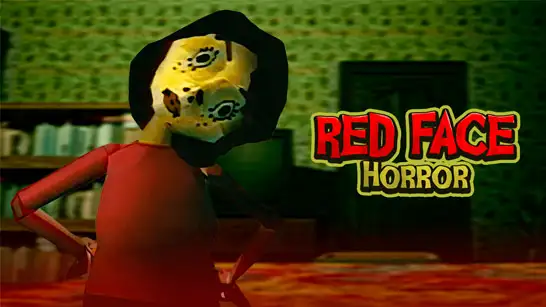
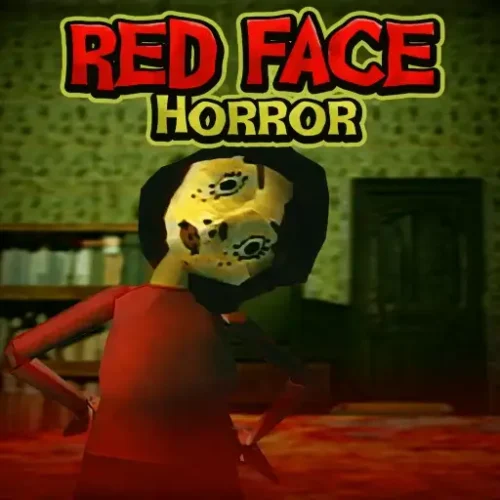







You play as Ron, a young boy spending the night in his family apartment after a forgotten birthday and a violent argument. A fictional monster his mother invented to comfort him starts appearing — and the game makes you piece together whether Mr. Red Face is real, or something the family’s dysfunction has made real.
Red Face Horror is a first-person psychological horror game published on April 3, 2026, available free in browser on desktop, tablet, and mobile. There is no combat. The whole game is exploration, observation, and interaction — completable in a single session of around 20 minutes.
| Feature | Details |
|---|---|
| Released | April 3, 2026 |
| Genre | Psychological horror, first-person exploration |
| Setting | Family apartment, single night |
| Protagonist | Ron — a young boy |
| Playtime | Approximately 20 minutes, single playthrough |
| Combat | None |
| Platform | Browser (desktop, tablet, mobile) |
Contents
The Story
Ron’s birthday passes almost entirely forgotten. His mother comes home late and exhausted — when he asks about a gift, she invents a story about Mr. Red Face: a creature who visits well-behaved children while they sleep and rewards them. Ron believes her. That night, his father comes home. An argument follows.
From that point, Mr. Red Face stops being a story. He visits at midnight and leaves Ron a doll that looks like him. Surreal and disturbing events begin unfolding through the apartment — objects move, sounds shift, rooms feel different from how they were. The game is about following those changes to understand what is actually happening inside this family, and what Mr. Red Face truly represents.
The narrative deals with domestic tension, parental behavior, and the way children process frightening realities through invented stories. The horror is atmospheric and psychological rather than creature-based — most of what makes it unsettling is what it implies, not what it shows directly.
Gameplay
There are no fights, no stamina meters, no inventory management. The game is a first-person walking exploration of a small apartment. You move through rooms, click on highlighted objects to interact with them, speak to family members, and follow environmental cues to advance the story.
The apartment changes as the night progresses — objects move from where they were, sounds become more hostile, and the space that felt familiar begins to feel wrong. The environment itself is the storytelling mechanic. A room that looked one way when you entered it may look different when you return. These shifts are the game’s clues, not decoration.
One confirmed in-game mechanic is the doll left by Mr. Red Face. Following where the doll leads or what it points toward reveals symbolic clues about the story. The game also includes an in-game fanart gallery — a tonal break from the horror that players can find and browse during a playthrough.
Controls
| Action | Input |
|---|---|
| Move / explore | First-person navigation through rooms |
| Interact with objects | Click highlighted items |
| Progress story | Interact with family members via dialogue |
The game gives no upfront tutorial on controls — confirmed across multiple sources. Interactable objects are highlighted, which is the only guidance the game provides. If something glows or has a visual prompt, it can be clicked. If the story feels stuck, there is almost always an object nearby that hasn’t been clicked yet.
What to Pay Attention To
Red Face Horror is designed so that the environment communicates the story rather than text walls or cutscenes. Three things consistently matter:
- Sound changes — audio shifts signal that something in the room has changed or that an important moment is approaching. The game uses sound as an early warning system throughout the night.
- Room layout differences — if a room looks different from when you last visited it, that difference is intentional. Items that have moved, lights that have changed, furniture that has shifted — these are clues, not glitches.
- Dialogue with family members — speaking to Ron’s mother and father reveals layers of the family dynamic that give context to what Mr. Red Face represents. The game’s emotional weight depends on these conversations being read carefully, not skipped.
Tips
▸ Click everything that can be clicked before moving to the next room
Some interactable objects sit outside the obvious camera frame — near the edges of rooms or on the borders of the visible space. The game does not tell you when a room is fully explored. Move the camera around the full perimeter of each room before leaving it. Missed objects can make the story feel incomplete or leave players stuck without knowing why.
▸ Don’t rush past the opening domestic scenes
The early part of the game — before anything overtly supernatural happens — establishes exactly what the horror is responding to. Players who rush to get to the scary parts miss the context that makes the ending land. The tension between Ron’s parents and the atmosphere of that first evening is the key to understanding everything that follows.
▸ When stuck, return to a room you’ve already visited
The apartment changes between visits. If progress has stalled, going back to a room that previously felt complete will often reveal that something has shifted — a new object, a changed detail, or a door that wasn’t open before. The game’s progression is tied to environmental changes, not to finding a specific next trigger in a linear order.