




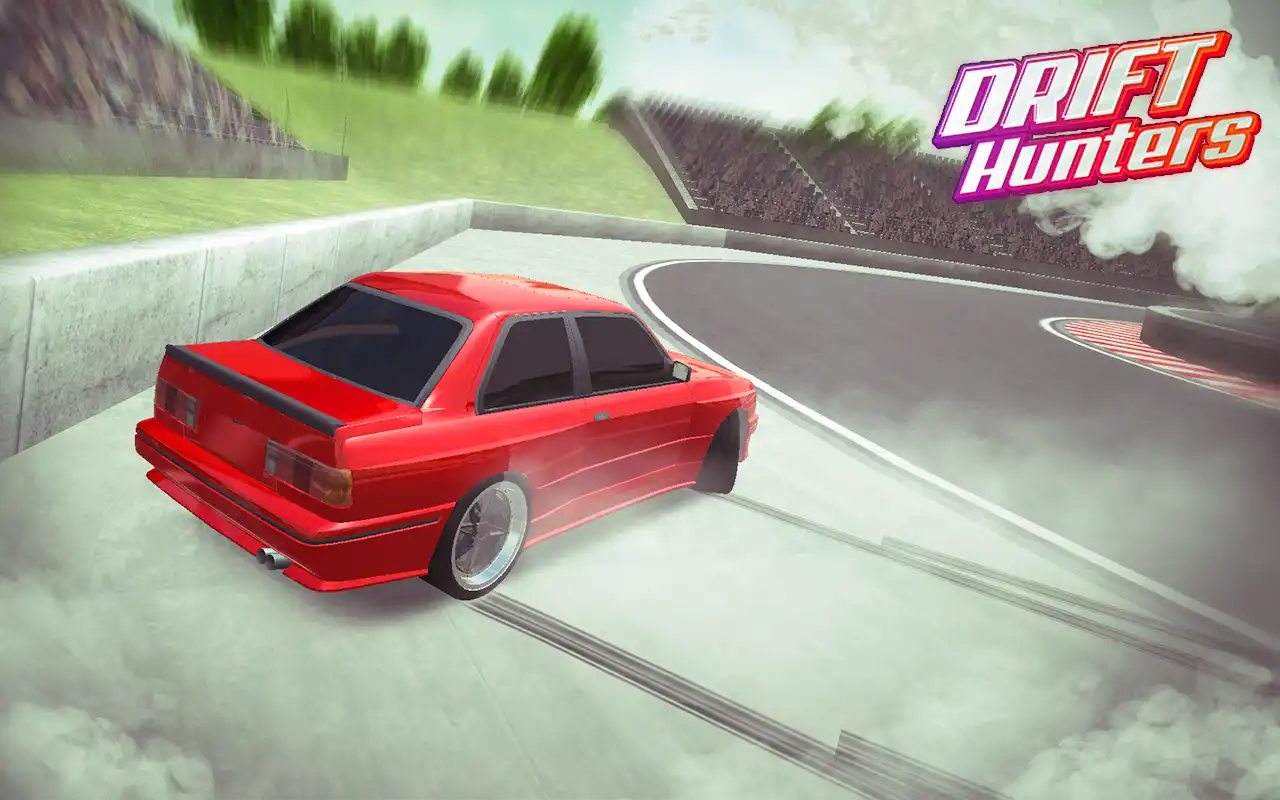
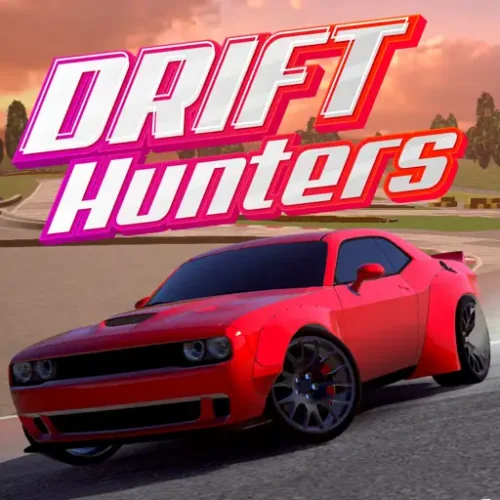



Play Drift Hunters free. Master 26 cars across 10 tracks with deep Parts and Tuning systems. Learn real drift physics fundamentals. Drift Hunters hands you the keys to a legendary lineup of JDM icons – starting with a humble Toyota AE86 – and lets you loose on ten tracks built entirely for one purpose: holding the longest, cleanest drift you possibly can. Beyond just picking a car, a genuinely deep tuning system lets you shape exactly how that car handles under pressure, turning a stock ride into a purpose-built drift machine. No downloads, no account required to start. Works in Chrome, Firefox, Edge, and on mobile.
What Is Drift Hunters?
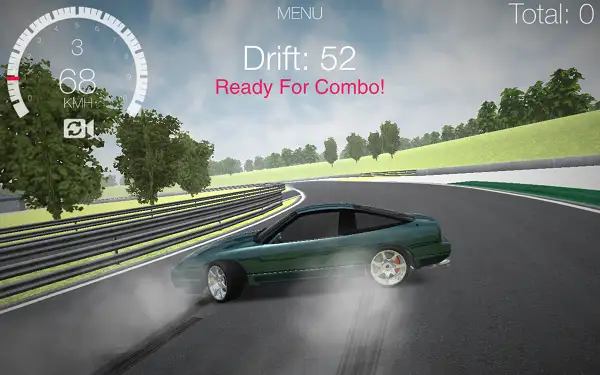
Drift Hunters is a free-to-play, browser-based 3D drifting simulator developed by Studionum43 (Ilya Kaminetsky) and released in February 2017. Built on the Unity engine, it delivers a genuinely detailed drift experience for a browser game – realistic-feeling physics, a real garage system, and a roster of 26 real-world-inspired cars, all running at a stable frame rate even during long, sustained slides.
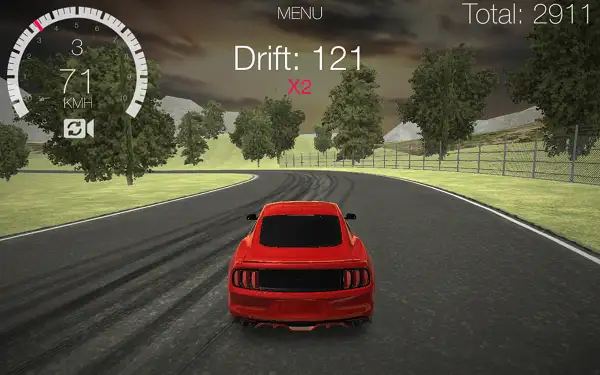
The core loop is simple to describe but genuinely satisfying to master: pick a car, head to a track, and score points purely through drifting. The longer you hold a clean slide without spinning out, the higher your score multiplier climbs – meaning one smooth 10-second drift is worth far more than several short, choppy ones. Those points double as your in-game currency, funding new cars and, just as importantly, the performance and tuning upgrades that actually determine how well a car drifts once you’re behind the wheel.
How to Play Drift Hunters
- Pick your starting car. You begin with the Toyota AE86, a genuinely capable entry-level drift car that’s more than enough to learn the game’s core mechanics.
- Choose a track. Ten different circuits are available, each with its own layout and corner types.
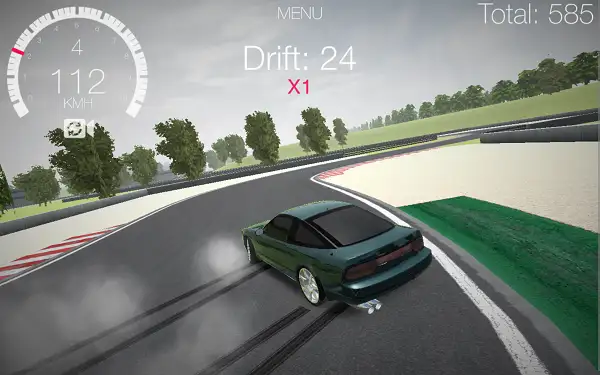
- Steer into a drift. Use WASD or the Arrow Keys to initiate and hold a slide through a corner.
- Shift gears to manage your momentum. Left Shift shifts up, Left Ctrl shifts down – managing your gear at the right moment helps maintain a drift rather than losing it.
- Hold your drift as long and as cleanly as possible. Your score multiplier climbs the longer you sustain a slide without spinning out or straightening up too early.
- Reinvest your points into Parts and Tuning. Beyond simply buying a new car, upgrading and tuning your current one is often the faster route to higher scores.
- Work toward the top-tier cars. The most expensive vehicles cost well over 130,000 points, giving you a long-term goal beyond just improving your drifting technique.
Controls
| Action | Input |
|---|---|
| Steer | WASD or Arrow Keys |
| Shift Up | Left Shift |
| Shift Down | Left Ctrl |
The control setup is built primarily around keyboard input, though the browser version also supports Xbox and PlayStation controllers if you’d prefer a gamepad, which many players find gives smoother, more graduated throttle control than a keyboard once they’re comfortable with the basics. On mobile and tablets, on-screen touch buttons replace the keyboard controls entirely.
Cars and Tracks
Drift Hunters includes 26 cars in total, all unlocked purely through in-game points rather than real money. The roster spans accessible starters up to genuine dream-garage machines:
- Toyota Corolla (AE86) – Your free starting car, iconic in drift culture and fully capable of learning the game’s fundamentals.
- Nissan Silvia (S13, S14, S15) – A trio of classic Japanese drift platforms. The S15 in particular is widely recommended as one of the best cars for beginners, thanks to a balanced chassis and a relatively affordable upgrade path.
- Toyota Supra (MK4) – A legendary performance car with serious drifting pedigree and a longer wheelbase that many players find more forgiving at extreme drift angles.
- Mazda RX-7 (FD3S) – Another JDM icon, known for high power but a lower margin for error than more forgiving cars.
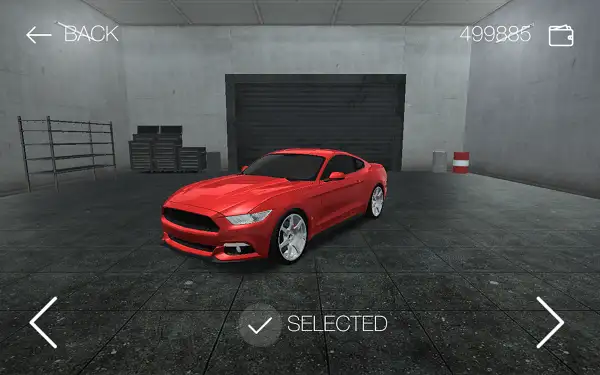
- Ford Mustang – A muscle car alternative to the mostly Japanese lineup, with a more evenly balanced weight distribution than most.
- Nissan GT-R (R35) – The fastest car in the game, with a top speed of around 320 km/h (199 mph) and strong all-around stability.
- RWB Porsche 911 GT (993) – The single most expensive car in the game, priced at well over 130,000 points. Its rear-mounted engine gives it a heavy rear weight bias, which translates into strong oversteer potential once properly tuned.
Ten tracks round out the game: Nishuri, Stadium, Tyshen, Docks, Dust, Port, Emashi, Touge, Forest, and City. Forest in particular is widely considered the best track for building large point totals quickly, thanks to its long, sweeping corners that are far more forgiving for sustaining a high-multiplier drift than the tighter, more technical layouts elsewhere in the game.
Understanding Parts vs. Tuning
Drift Hunters splits car improvements into two separate systems, and understanding the difference is key to actually getting better at the game rather than just spending points randomly.
Parts (Performance Upgrades)
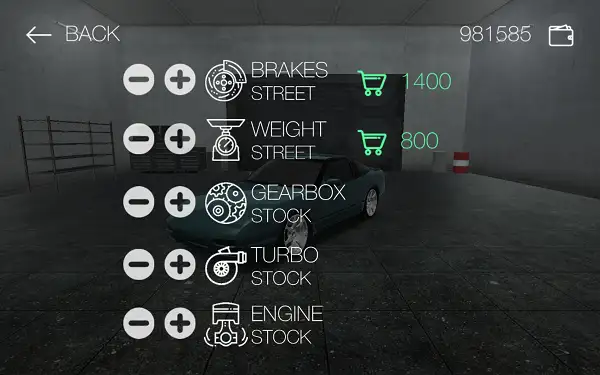
Five upgrade categories are available for every car – Brakes, Weight, Gearbox, Turbo, and Engine – each available in four progressive tiers: Stock (the default), Street, Racing, and Pro, with Pro being both the most expensive and the most powerful option.
- Brakes – Improves braking and handbrake strength, giving you sharper control over exactly when a drift initiates.
- Weight – Reduces the car’s overall weight, which smooths out handling thanks to reduced inertia fighting against your inputs.
- Gearbox – Affects how your car manages power delivery through the gears during a sustained drift.
- Turbo – Increases available power, letting you maintain drift speed through longer corners without losing momentum.
- Engine – The core power upgrade, generally considered one of the most impactful purchases for cars that start out underpowered.
Tuning
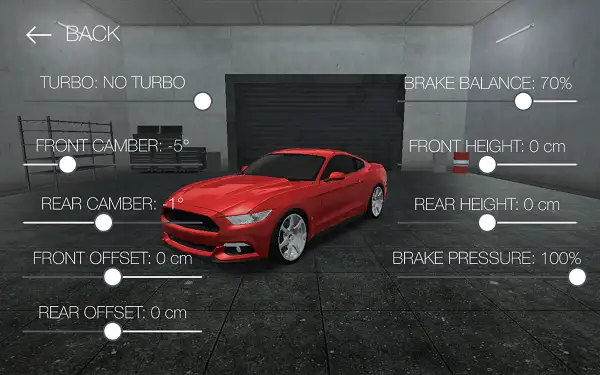
Separate from Parts, the Tuning menu lets you fine-tune handling characteristics directly – things like brake balance, front camber, and rear offset – allowing for much finer control over exactly how a car behaves at the limit than the Parts system alone provides. This is where players chasing serious high scores spend most of their experimentation time, since small tuning adjustments can meaningfully change how sustainable a drift angle is before spinning out.
Drift Physics Fundamentals
A few general principles apply across almost every car in the game, useful to know before you start experimenting with tuning yourself:
- Long cars with a narrow wheelbase tend to drift best. This mirrors real-world drift car design and generally holds true across the Drift Hunters roster as well.
- Rear-engine, rear-weight-biased cars offer strong oversteer potential. The Porsche 911 is the clearest example in the game – its rearward weight distribution makes it prone to long, smoky slides once tuned properly, in contrast to a more evenly balanced car like the Mustang.
- Power delivery matters as much as raw horsepower. A smooth, predictable torque curve is often more valuable for modulating drift angle precisely than simply having the highest top-end power.
Tips and Tricks
- Start with Engine and Turbo upgrades using your free starting credits. Since most base cars are underpowered, these two upgrades typically deliver the most noticeable improvement before you touch anything else.
- Pick the Silvia S15 if you want an easier learning curve than the AE86 offers. Its balanced chassis is widely recommended specifically for players still getting comfortable with sustained drifting.
- Don’t upgrade everything to Pro immediately. Jumping straight to the most expensive tier across every category can actually make a car harder to control – a more gradual, targeted approach to upgrades tends to produce a more predictable result.
- Match your tuning to your car’s natural weight bias. A rear-heavy car like the Porsche wants a very different tuning approach than a more balanced car like the Mustang – don’t apply the same settings across every vehicle in your garage.
- Farm points on Forest before attempting technical tracks. Its long, sweeping corners are the most efficient layout in the game for building a big score, especially useful while you’re still saving toward a specific car or Pro-tier upgrade.
- Prioritize drift duration over drift frequency. Since your score multiplier climbs the longer you sustain a single slide, one smooth, extended drift is worth significantly more than several short, broken ones.
- Experiment with tuning in small increments. Since the Tuning menu offers genuinely fine control over handling, making one adjustment at a time and testing it – rather than changing several settings simultaneously – makes it much easier to understand what’s actually improving your results.
Other Similar Games
Frequently Asked Questions
What is Drift Hunters?
Drift Hunters is a free, browser-based 3D drifting simulator where you drift a roster of real-world-inspired cars across ten tracks, earning points based on drift length and cleanliness to unlock new vehicles and upgrades.
Who made Drift Hunters?
Drift Hunters was developed by Studionum43 (Ilya Kaminetsky) and released in February 2017, built using the Unity engine.
What’s the difference between Parts and Tuning?
Parts are broad performance upgrades – Brakes, Weight, Gearbox, Turbo, and Engine – available in Stock, Street, Racing, and Pro tiers. Tuning is a separate, more detailed system for fine-adjusting specific handling characteristics like brake balance, camber, and offset.
What’s the best car for beginners?
The Nissan Silvia S15 is widely recommended as an easier starting point than the default AE86, thanks to its balanced chassis and relatively forgiving handling at higher drift angles.
How many cars and tracks are in the game?
There are 26 cars to unlock, ranging from the starting Toyota AE86 up to the Porsche 911 GT (993), and 10 tracks including Nishuri, Stadium, Tyshen, Docks, Dust, Port, Emashi, Touge, Forest, and City.
Why does the Porsche 911 drift differently from other cars?
Its rear-mounted engine gives it a heavy rear weight bias, resulting in strong natural oversteer potential compared to more evenly balanced cars in the roster.
Should I upgrade every part to the maximum tier immediately?
Not necessarily. Jumping straight to Pro-tier upgrades across every category can make a car feel unpredictable – a more gradual, targeted upgrade path tends to produce better, more controllable results.
How does scoring work?
You earn points by drifting – the longer and cleaner your slide, the higher your score multiplier climbs. These points fund both new cars and the performance and tuning upgrades that improve how your current car handles.
Can I play Drift Hunters with a controller?
Yes. The browser version supports Xbox and PlayStation controllers in addition to keyboard controls.
Is Drift Hunters Pro the same game?
No. Despite the similar name, Drift Hunters Pro is developed by a completely different studio, Freezenova, and is not connected to the original Drift Hunters by Studionum43.
Which browser works best for Drift Hunters?
Drift Hunters runs well on Chrome, Firefox, and Edge, thanks to its Unity WebGL foundation.
Why isn’t Drift Hunters loading?
Check your internet connection, make sure this site isn’t blocked on your network, and try disabling any ad blockers – these are the most common causes of loading issues.
Car GamesPopular gamesRacing & DrivingRacing GamesSingle Player GamesUnblocked Games