




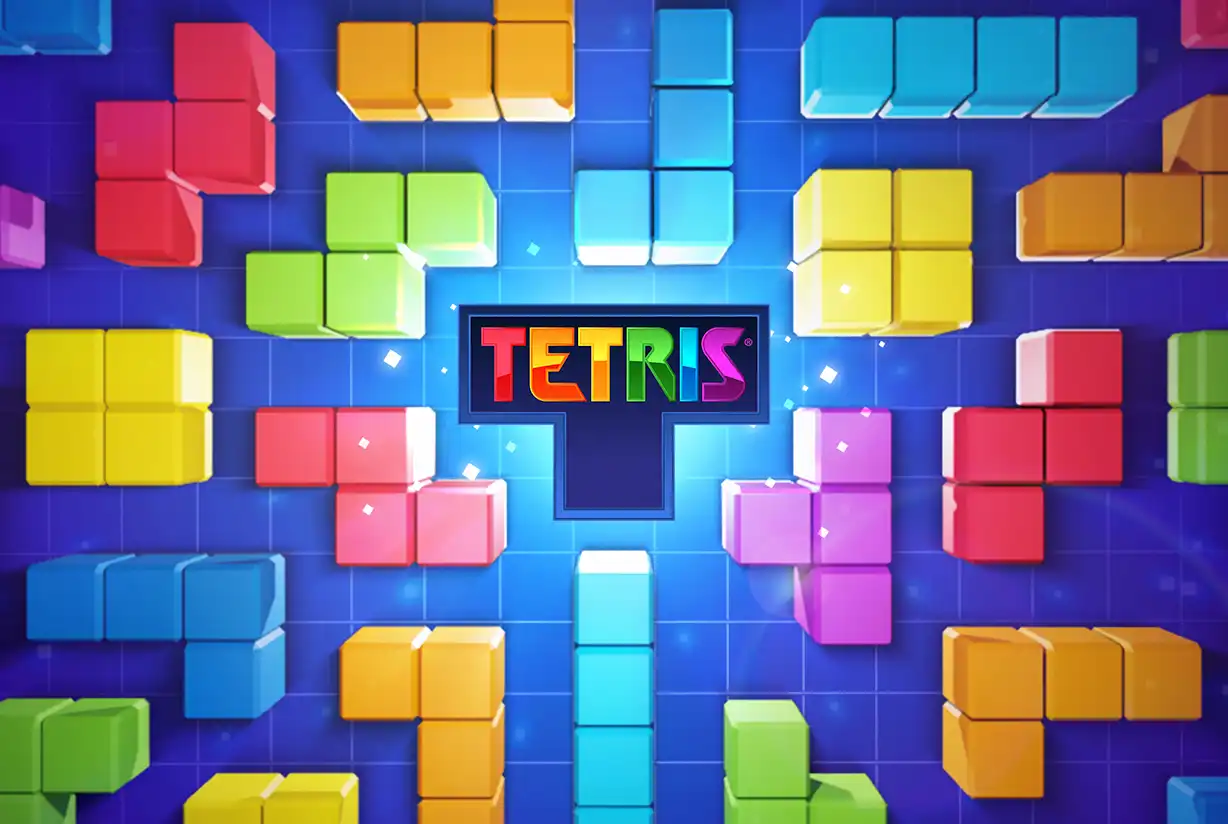








Tetris Puzzle is one of the most influential video games ever created. Designed by Alexey Pajitnov in 1984, Tetris transformed a simple idea—arranging falling blocks—into one of the most successful puzzle experiences in gaming history. Decades after its release, millions of players still enjoy Tetris because its gameplay remains easy to understand yet incredibly difficult to master.
Every match challenges players to manage space, anticipate future pieces, and make quick decisions while the game gradually becomes faster and more demanding. Whether you are trying to clear a few lines or chase record-breaking scores, Tetris Puzzle rewards planning, efficiency, and strategic thinking.
What Is Tetris Puzzle?
Tetris is a puzzle game where geometric shapes called Tetrominoes fall from the top of the screen.
Each Tetromino consists of four connected blocks.
The goal is simple: Arrange the falling pieces to create complete horizontal lines.
When a line is completely filled:
- The line disappears
- Points are awarded
- Space becomes available again
The game continues until blocks reach the top of the playfield and no new pieces can enter the board.
Although the rules are simple, the increasing speed creates a constant challenge that rewards smart planning and quick reactions.
About The Creator
Tetris was created by Russian software engineer Alexey Pajitnov while working at the Soviet Academy of Sciences during the mid-1980s.
The game was inspired by geometric puzzle pieces known as pentominoes.
To simplify gameplay, Pajitnov reduced the shapes into seven four-block pieces called Tetrominoes.
The result became one of the most successful video games ever created and has since appeared on dozens of platforms worldwide.
The Seven Tetrominoes
Every Tetris game is built around seven unique pieces.
I Piece
The long straight piece.
Best used for clearing four lines at once.
O Piece
The square-shaped piece.
Excellent for filling flat areas.
T Piece
One of the most versatile pieces.
Important for advanced techniques like T-Spins.
L Piece
Useful for filling corners and uneven surfaces.
J Piece
The mirrored version of the L Piece.
S Piece
Can quickly create difficult gaps if placed poorly.
Z Piece
Often considered one of the trickiest pieces to manage.
Understanding how each Tetromino behaves is one of the most important skills in Tetris.
Controls
Most modern Tetris versions use:
- Left Arrow = Move Left
- Right Arrow = Move Right
- Up Arrow = Rotate
- Down Arrow = Soft Drop
- Spacebar = Hard Drop
- Hold Key = Store Piece
Some versions may use slightly different controls, but these are the most common modern standards.
The Most Important Mechanic: The Tetris
Many beginners focus on clearing lines as soon as possible.
Experienced players often do the opposite.
Instead of clearing single lines, they intentionally leave one vertical column open.
When the long I-piece appears, they drop it into that gap and clear four lines simultaneously.
This move is called a Tetris.
A Tetris usually awards the highest standard line-clear score and is one of the fastest ways to build points.
Understanding Board Management
The biggest mistake new players make is focusing only on the current piece.
Advanced players focus on the entire board.
Good board management means:
- Keeping the surface flat
- Avoiding deep holes
- Maintaining flexibility
- Preserving future options
A clean board creates opportunities.
A messy board creates emergencies.
Most losses occur because players create difficult board states long before the final mistake happens.
How The Hold Mechanic Works
Modern Tetris versions include a Hold feature.
Hold allows players to:
- Store one piece
- Swap it later
- Save important pieces
- Avoid awkward placements
Many beginners ignore Hold entirely.
Competitive players use Hold constantly.
For example, storing an I-piece while preparing a future Tetris can create huge scoring opportunities.
Queue Reading: The Skill Most Players Ignore
One major difference between casual and advanced players is queue reading.
Modern versions show upcoming pieces.
Instead of reacting to the current piece, experienced players often plan:
- The current move
- The next move
- The move after that
Looking ahead dramatically improves decision-making and reduces panic situations.
Things The Game Doesn’t Tell You
Flat Boards Are Easier To Manage
Tall towers create dangerous situations.
Holes Are Expensive
One buried gap can require multiple pieces to fix.
Tetrises Beat Single-Line Clears
Large clears are generally more efficient.
The Hold Feature Is Powerful
Many players underestimate its importance.
Panic Causes Most Mistakes
The faster the game becomes, the more valuable calm decision-making becomes.
Common Mistakes Beginners Make
Clearing Lines Too Early
Not every line needs immediate removal.
Ignoring Future Pieces
Tunnel vision often creates avoidable problems.
Building Tall Towers
Height reduces available recovery options.
Creating Holes
Buried gaps become increasingly difficult to fix.
Wasting I Pieces
The long piece is often the most valuable Tetromino in the game.
Advanced Tetris Strategies
T-Spin Setups
A T-Spin involves rotating a T-piece into a tight space for bonus points.
Many competitive players build entire strategies around T-Spins.
Combo Chains
Consecutive line clears without interruption generate combo bonuses in many modern versions.
Back-to-Back Scoring
Linking Tetrises and T-Spins together often produces larger scores.
Efficient Stacking
Every placement should improve future possibilities.
Drought Prevention
Never depend entirely on one piece appearing.
Advanced players prepare backup plans when the I-piece refuses to show up.
The Hidden Skill: Risk Management
Most players think Tetris is about speed.
The highest-level players understand it is actually about risk management.
Every placement creates tradeoffs.
You can:
- Play safely
- Play aggressively
- Chase Tetrises
- Build T-Spins
The challenge is balancing reward against risk.
This decision-making process is what gives Tetris incredible depth despite its simple rules.
Why Tetris Is Still Popular After Decades
Very few games remain relevant for more than forty years.
Tetris succeeds because:
- Rules are simple
- Strategy is deep
- Every match feels different
- Skill improvement is rewarding
- No two boards are identical
The game remains accessible to beginners while providing endless challenges for experienced players.
Similar Games You Might Enjoy
Frequently Asked Questions
Who created Tetris?
Tetris was created by Alexey Pajitnov in 1984 while working at the Soviet Academy of Sciences.
What is a Tetris?
A Tetris occurs when a player clears four lines simultaneously using the I-shaped Tetromino.
What is a T-Spin?
A T-Spin is an advanced move where a T-piece is rotated into a tight space for bonus scoring.
What does Hold do in Tetris?
The Hold feature allows players to save a piece and use it later.
Why do advanced players leave a gap on the board?
Many players intentionally leave a vertical column open so they can perform future Tetrises using the I-piece.
Is Tetris skill-based?
Yes. While piece order contains randomness, long-term success depends heavily on planning, positioning, board management, and decision-making.
Final Thoughts
Tetris Puzzle remains one of the greatest puzzle games ever created because it combines simple mechanics with nearly unlimited strategic depth. Every falling piece presents a new decision, and every decision shapes the future of the board.
ArcadePuzzleSingle Player GamesUnblocked Games