




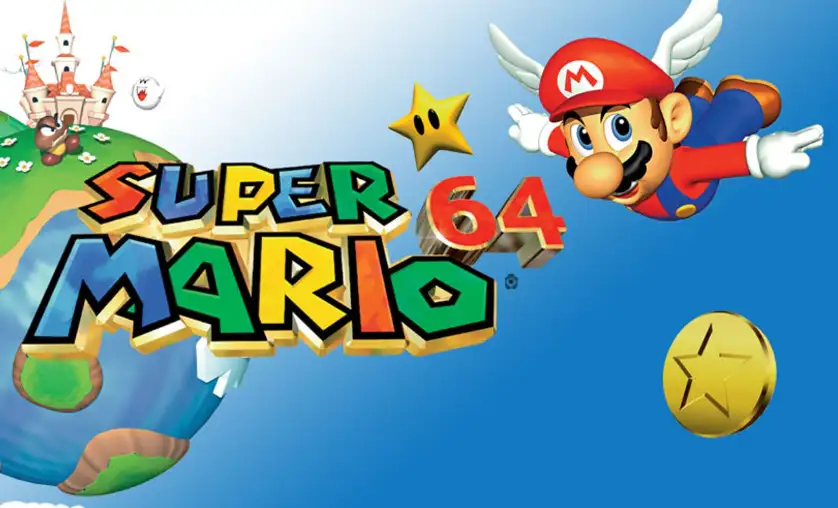
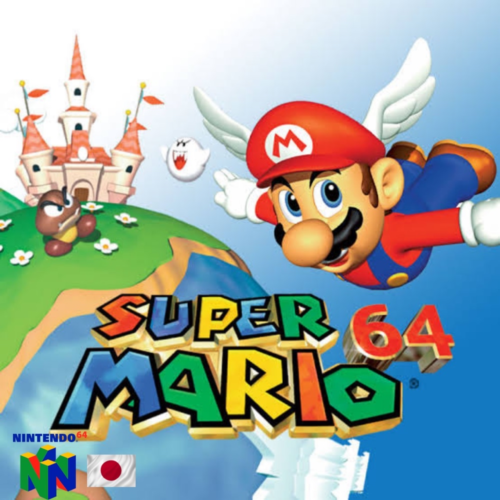






Super Mario 64 is one of the most influential video games ever created. Released by Nintendo for the Nintendo 64 in 1996, it transformed the platforming genre by successfully bringing Mario into a fully explorable 3D world. While modern players often remember the game for its castle, paintings, and Power Stars, its greatest achievement was creating movement systems and camera controls that became the blueprint for nearly every 3D platformer that followed.
Nearly three decades later, Super Mario 64 remains one of the most replayed platform games thanks to its freedom, exploration, speedrunning depth, and satisfying movement mechanics.
What Is Super Mario 64?
Super Mario 64 is a 3D platform-adventure game where players control Mario as he explores Princess Peach’s Castle and its connected worlds in search of Power Stars stolen by Bowser.
The game features 15 main courses along with multiple secret areas hidden throughout the castle. Unlike earlier Mario games that followed a linear stage structure, Super Mario 64 allows players to revisit levels, select different objectives, and explore environments freely. Power Stars unlock new castle areas, eventually leading to Bowser’s final challenge.
Why Super Mario 64 Changed Gaming Forever
Many games existed in 3D before Super Mario 64.
Very few understood how 3D movement should feel.
Nintendo introduced several innovations that became industry standards:
- Analog movement
- Dynamic camera systems
- Open-level exploration
- Mission-based objectives
- Hub-world progression
- Precision platforming in 3D spaces
The game’s camera system, movement design, and analog controls became the foundation for future 3D platformers including Banjo-Kazooie, Spyro the Dragon, Kingdom Hearts, and countless others. Developers across the industry have openly cited Super Mario 64 as a major influence.
The Story
Mario receives a letter inviting him to Princess Peach’s Castle.
Upon arriving, he discovers Bowser has invaded the castle, trapped Peach, and stolen the castle’s Power Stars.
To rescue Peach, Mario must explore magical worlds hidden within paintings and secret portals throughout the castle.
Each collected Power Star helps unlock new doors, courses, and Bowser battles until Mario finally confronts Bowser and restores peace to the Mushroom Kingdom.
How Power Stars Work
Power Stars are the main progression system.
Every course contains multiple stars earned through different objectives.
Examples include:
- Defeating bosses
- Winning races
- Collecting red coins
- Reaching hidden locations
- Completing platforming challenges
One of the game’s most important design choices is that players do not need every star to finish the game.
This freedom allows players to skip difficult objectives and pursue stars that better match their playstyle.
Main Courses In Super Mario 64
The game contains 15 primary worlds:
- Bob-omb Battlefield
- Whomp’s Fortress
- Jolly Roger Bay
- Cool Cool Mountain
- Big Boo’s Haunt
- Hazy Maze Cave
- Lethal Lava Land
- Shifting Sand Land
- Dire Dire Docks
- Snowman’s Land
- Wet-Dry World
- Tall Tall Mountain
- Tiny-Huge Island
- Tick Tock Clock
- Rainbow Ride
Each course introduces unique mechanics and exploration challenges.
Unlike many platform games, levels are designed around multiple objectives rather than a single finish line.
The Most Important Skill: Movement Mastery
Most beginners treat Super Mario 64 as a jumping game.
Experienced players know it is actually a movement game.
Mario’s moveset includes:
- Triple Jump
- Long Jump
- Wall Kick
- Dive
- Ground Pound
- Backflip
- Side Somersault
- Slide Kick
These moves allow players to approach objectives in multiple ways and often reach areas that seem inaccessible.
Many of the game’s secrets become much easier once players understand how to chain movement techniques together.
How To Long Jump In Super Mario 64
The Long Jump is arguably the most useful move in the game.
To perform it:
- Begin running.
- Press Z.
- Press Jump simultaneously.
The Long Jump provides:
- Extra distance
- Faster movement
- Better recovery options
- Speedrunning advantages
Many advanced players use Long Jumps constantly because they are often faster than regular movement.
Castle Progression Strategy
One area competitors rarely explain properly is castle routing.
New players often wander randomly through the castle.
A more efficient approach is:
Early Game
Focus on:
- Bob-omb Battlefield
- Whomp’s Fortress
- Cool Cool Mountain
These levels contain several accessible stars and teach important mechanics.
Mid Game
Expand into:
- Hazy Maze Cave
- Lethal Lava Land
- Shifting Sand Land
These introduce more complex exploration challenges.
Late Game
Prepare for:
- Tick Tock Clock
- Rainbow Ride
These levels contain some of the game’s most demanding platforming sections.
The Three Special Caps
One of the game’s most memorable systems involves special power-up caps.
Wing Cap
Allows Mario to fly after launching into the air.
Metal Cap
Turns Mario into metal, allowing him to walk underwater and resist hazards.
Vanish Cap
Makes Mario partially invisible and allows passage through certain barriers.
Unlocking these caps opens entirely new routes and hidden stars throughout the game.
Things The Game Doesn’t Tell You
Not Every Star Needs To Be Collected
Many players assume 100% completion is required.
It is not.
Long Jump Is Faster Than Running
Experienced players use Long Jumps for travel constantly.
Some Stars Are Easier Than Others
The game encourages flexible progression.
Secret Areas Matter
Many valuable rewards are hidden outside the main courses.
Camera Management Is A Skill
Learning how to work with the camera dramatically improves platforming consistency.
Common Mistakes Beginners Make
Ignoring Movement Techniques
Many players rely only on standard jumps.
Chasing Difficult Stars Too Early
Some objectives are significantly harder than others.
Forgetting To Explore The Castle
Numerous secrets exist outside the main levels.
Fighting The Camera
Good camera positioning prevents many unnecessary falls.
Skipping Cap Unlocks
Wing, Metal, and Vanish Caps make later objectives easier.
Advanced Super Mario 64 Tips
One of the biggest differences between casual players and experienced players is movement efficiency.
Strong players constantly combine moves:
- Triple Jump → Dive
- Long Jump → Wall Kick
- Slide → Jump
- Backflip → Wall Kick
Another advanced technique involves learning star routing.
Instead of completing objectives randomly, experienced players plan efficient star collections that minimize travel and maximize progression.
This concept eventually becomes the foundation of speedrunning.
Why Speedrunners Still Love Super Mario 64
Few games have maintained a speedrunning community as large as Super Mario 64.
The game’s movement system creates endless opportunities for optimization.
Players continue discovering:
- New routes
- Movement techniques
- Sequence breaks
- Advanced tricks
- Major glitches
Entire communities are dedicated to understanding every aspect of Mario’s movement physics.
Similar Games You Might Enjoy
Frequently Asked Questions
How many Power Stars are in Super Mario 64?
The original game contains 120 Power Stars available through main courses and secret areas.
Do you need all 120 stars to beat the game?
No. Players can complete the game without collecting every Power Star.
What is the hardest level in Super Mario 64?
Many players consider Tick Tock Clock and Rainbow Ride among the most difficult courses.
What are the three special caps?
Wing Cap, Metal Cap, and Vanish Cap each provide unique abilities used to access hidden areas.
Why is Super Mario 64 so important?
It established many of the movement, camera, and exploration standards that later defined the 3D platforming genre.
Final Thoughts
Super Mario 64 remains one of the most important games ever made because it solved problems that the entire gaming industry was struggling with in the mid-1990s. Its combination of open exploration, mission-based progression, analog movement, and precise platforming created a blueprint that countless developers would follow.
AdventurePlatformUnblocked Games