






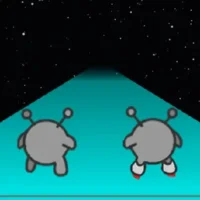
Endless runner games strip movement down to its simplest form: you’re moving forward (or down, or sideways) automatically, and your only job is to react — jump, slide, switch lanes, or dodge — to whatever appears in front of you. There’s no “finish line” by design; the game continues until you make a mistake, and the entire goal is to see how far you can get before that happens.
This simplicity is what makes the genre so portable — endless runners work just as well with a single tap as they do with a full keyboard, which is part of why the format has been so popular on both mobile and browser platforms.
What Separates a Good Endless Runner from a Repetitive One
The best endless runners introduce variation gradually — new obstacle types, new patterns, or environmental changes — so that even though the core action (jump, dodge, slide) never changes, the situations you’re reacting to keep evolving. A runner that just repeats the same three obstacles on a loop tends to feel stale quickly, while one that keeps introducing small new wrinkles can stay engaging for much longer sessions.
Speed is another major factor. Many endless runners gradually increase your speed the longer you survive, which means the same obstacle pattern that was manageable a minute ago becomes much harder later in the same run — part of the challenge is that your reaction window keeps shrinking even as the game looks the same.
Tips for Longer Runs
- Don’t stare at your character — look ahead. The earlier you see an obstacle, the more time you have to react. Players who watch their own character tend to react late.
- Learn the “rules” of each obstacle type. Most runners only have a handful of obstacle types, each with one correct response (jump, slide, switch lane). Once you can identify an obstacle instantly, the reaction becomes automatic.
- Accept that speed increases are part of the design. If a run that felt fine suddenly feels too fast, it’s not necessarily that you got worse — the game is actively making itself harder as a way of eventually ending every run.
If you like the score-chasing nature of endless runners, our broader Arcade Games and Skill Games categories cover similar “beat your own record” territory with different core mechanics.